
How to Find a Physical Therapist Who Actually Works With Cyclists
Bike-fit literacy, the questions to ask, and the red flags — picking a PT who understands the machine
Updated October 20262 minute read
A cycling-literate PT treats riders regularly, asks about your bike, fit, and weekly hours before judging your body, and reasons about saddle height and reach as load variables — not trivia. Many coordinate directly with bike fitters. You can book directly in most states, and cash-pay means you pick the specialist rather than whoever is in-network.
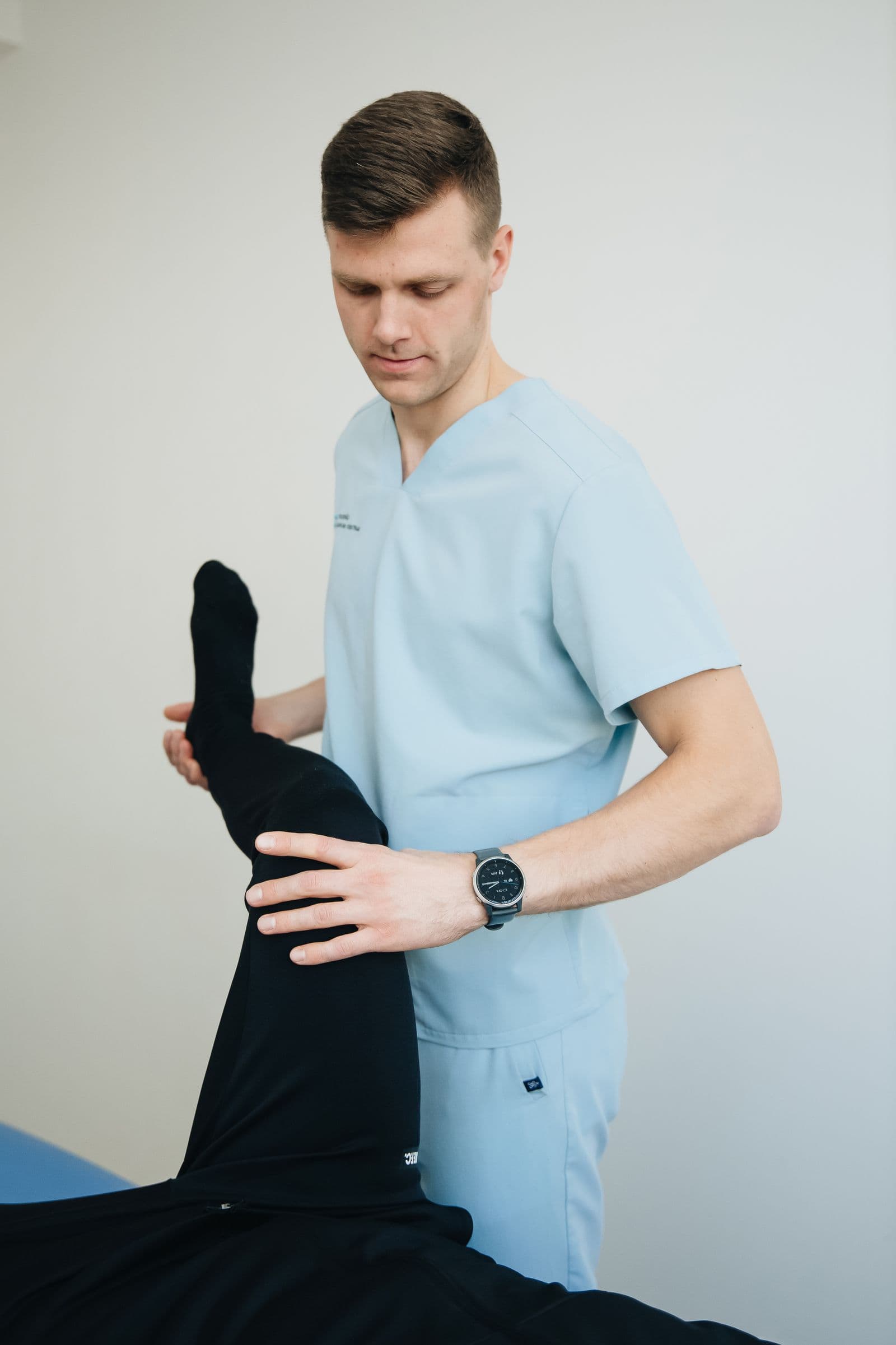
Why "cycling PT" is a real niche
Any licensed PT can treat a sore knee. But cyclists present differently: the pain is produced by a fixed position repeated thousands of times an hour, the first suspect is usually the machine's setup rather than the tissue alone, and the fix almost always involves both. A PT who treats riders reasons fluently about saddle height, reach, and cleat position as load variables — the fit-injury map — and knows that overuse trouble in cyclists clusters exactly where the research says it does: knees, low back, neck, and hands.
The practical test: do they ask about your bike before your body? A cycling-literate evaluation wants your weekly hours, your bike(s) and last fit, indoor-vs-outdoor mix, and what changed before the pain started (new bike, new saddle, Zwift race league). If none of that comes up, you're in the wrong clinic.
What to look for
- Caseload, not just credentials. Ask "how many cyclists do you treat in a typical month?"
- Credentials that signal investment: SCS or OCS board certifications (credentials decoded), plus bike-fit training or a clinic trainer setup.
- A fit-literate exam. For knee pain, saddle height gets discussed in visit one; for numb hands, weight distribution and reach do. If the evaluation never leaves the painful spot, the cause is being missed.
- A keep-you-riding philosophy. Good answer: "we'll find the hours, gears, and position your knee tolerates and build from there." Bad answer: "stop riding until it stops hurting."
Questions to ask before booking
- How many cyclists do you treat?
- Will you look at my position — photos, video, or a trainer in clinic?
- Do you coordinate with bike fitters, and when do you refer to one?
- Can I keep riding during rehab, and what would a modified week look like?
- What does a typical plan look like — visits, cost, timeline — and do you provide a superbill?
Red flags
- No interest in your bike, fit history, or weekly hours
- "Stop riding" as the entire plan for an overuse problem
- Passive-only care — heat, ultrasound, massage — with no strength or position plan attached
- Treating numb hands or saddle numbness as things to toughen through
Why cash-pay works in your favor here
Insurance networks assign you a PT by contract, not by specialty. Paying directly means choosing the clinician who actually speaks bike — and in most states you can book without a referral. Many plans still reimburse part of the cost via superbill.
Riding in the Bay Area? The local cycling guide covers prices and the riding scene, and you can browse cycling-friendly PTs across the region when you're ready to compare.
Frequently asked questions
Sources (6)
- APTA. Direct Access by State: physical therapist direct access laws summary. — APTA
- Physical Therapy Board of California. Direct access to physical therapist services. — PTBC
- Clarsen B, et al. Overuse injuries in professional road cyclists. Am J Sports Med. 2010. — AJSM
- ChoosePT (APTA). Physical therapy guide: patellofemoral pain. — ChoosePT
- MedlinePlus. Knee pain. — MedlinePlus
- van der Heijden RA, et al. Exercise for treating patellofemoral pain syndrome. Cochrane Database Syst Rev. 2015. — Cochrane
This article is for education only and isn't medical advice. Always talk to a licensed clinician about your specific situation.