
Bike Fit and Injury: The Honest Guide to What Your Position Is Doing to You
Saddle height, reach, cleats — how fit distributes load, what it can fix, and what it can't
Updated October 20263 minute read
On a bike, your position is your load distribution: saddle height decides what your knees absorb, reach and drop set the budget for your neck, back, and hands, and cleat position steers knee tracking. A good fit resolves a remarkable share of cycling pain — and it can't do everything, because tissues still need the capacity to handle the miles. Change one thing at a time, and treat every fit change as a training change.
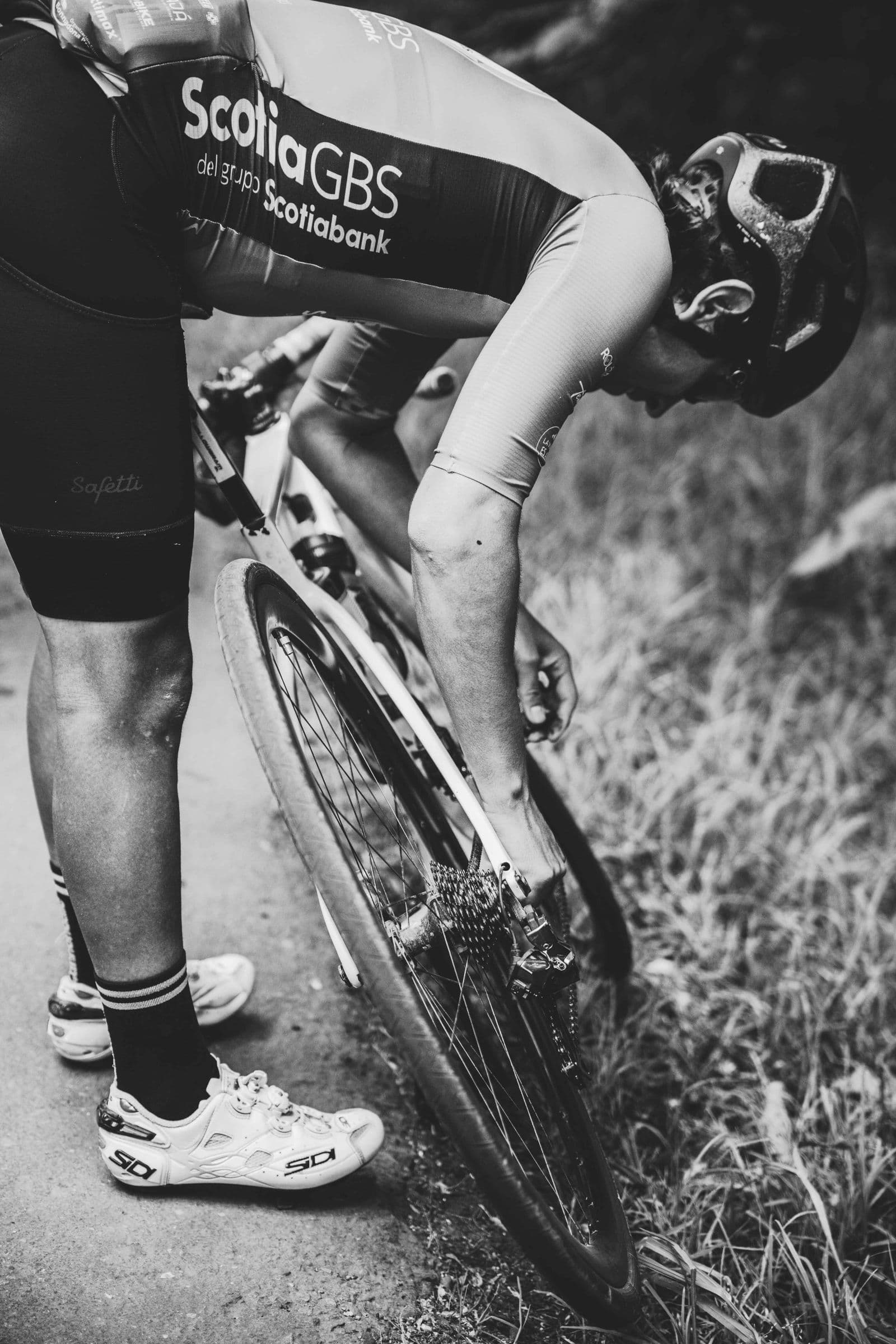
Your position is your load distribution
Running spreads load through impact; cycling spreads it through position. Five contact points — two feet, two hands, one saddle — carry everything, and millimeters at any of them change which tissue does the work for the next ten thousand pedal strokes. That's why bike fit sits at the center of almost every overuse conversation in cycling, and why research on both professional and recreational riders keeps finding the same thing: position problems and overuse pain travel together.
The flip side, stated honestly up front: fit redistributes load; it doesn't create capacity. A perfect position on an undertrained body still breaks down when the miles spike — which is why this guide pairs with load management and strength work rather than replacing them.
The dials, and what each one loads
Saddle height — the knee dial. Too low and the knee closes hard at the top of the stroke, loading the kneecap — the classic front-of-knee recipe. Too high and you reach at the bottom: pain behind the knee, IT-band irritation at the outside, rocking hips that annoy the saddle contact too. Fitting research treats measured knee angle as the anchor, and small changes matter — centimeters are a big deal at 5,000 strokes an hour.
Saddle fore-aft — the knee-over-pedal dial. Forward shifts work to the front of the knee and quads; rearward shifts it to hips and hamstrings. It also changes reach, which is why it gets set before the cockpit does.
Reach and drop — the neck, back, and hands budget. A cockpit that's too long or too low pulls you onto your hands (numbness territory — the hand guide) and cranks your neck into extension for hours (the neck-and-back guide). Comfort research is blunt: position drives perceived comfort and pain more than almost any equipment purchase.
Cleats — the knee-tracking dial. Cleat position and float decide the line your knee travels. A cleat fighting your natural rotation is a small irritation multiplied by every stroke of every ride.
Crank length, briefly: shorter cranks close the knee and hip less at the top of the stroke — a legitimate tool for riders with cranky knees or hips, best changed with guidance because it moves everything else.
Who does what: fitter vs. PT
A good bike fitter optimizes the machine around a body that works. A PT with fit literacy works on the body — strength, mobility, pain — and knows enough about the machine to say "your saddle is part of this story." When pain is already present, start with the PT evaluation: pain changes your pedaling, and a fit done around a guarding pattern can lock it in. The best Bay Area outcomes usually involve both, in conversation.
Two rules that prevent most fit regret
- One change at a time. Saddle height OR cleats OR stem — never all three on the same Tuesday. You can't troubleshoot three moved variables.
- A fit change is a load change. New position, easy week. Tissues that haven't worked before need the same gradual on-ramp as new mileage — the load-management rules apply to millimeters, not just miles.
When the problem isn't the bike
Pain that persists across a competent fit, returns every time volume climbs, or lives in one leg only usually isn't a position problem — it's a capacity or tissue problem wearing a fit costume. That's the two-week evaluation line: cash-pay runs $125–$250 ($175–$275 in the Bay Area, what PT costs), and a cycling-literate PT will look at you and ask about your bike. Bay Area riders can browse cycling-friendly PTs by region.
Frequently asked questions
Sources (5)
- Asplund C, et al. Knee pain and bicycling: fitting concepts for clinicians. Phys Sportsmed. 2010. — Phys Sportsmed
- Bini R, et al. Methods to determine saddle height in cycling and implications of changes in saddle height. J Sports Sci. 2021. — J Sports Sci
- Priego Quesada JI, et al. Effect of bike-fit in the perception of comfort, fatigue and pain. J Sports Sci. 2017. — J Sports Sci
- Clarsen B, et al. Overuse injuries in professional road cyclists. Am J Sports Med. 2010. — AJSM
- Dettori NJ, Norvell DC. Non-traumatic bicycle injuries: a review of the literature. Sports Med. 2006. — Sports Med
This article is for education only and isn't medical advice. Always talk to a licensed clinician about your specific situation.