
Strength Training for Cyclists: The Gaps the Bike Leaves Behind
Bone, single-leg control, and the posterior chain — what riding doesn't build and lifting must
Updated October 20262 minute read
Cycling builds a magnificent engine and quietly leaves three gaps: bone (dedicated cyclists show lower bone density than runners and even non-athletes — the bike carries you, so your skeleton never gets the loading signal), single-leg control, and the posterior chain the riding position shortens. Two 20–30 minute sessions a week of heavy lower-body strength, hinge and glute work, and a sprinkle of impact closes all three — and the research says it makes you faster, not slower.
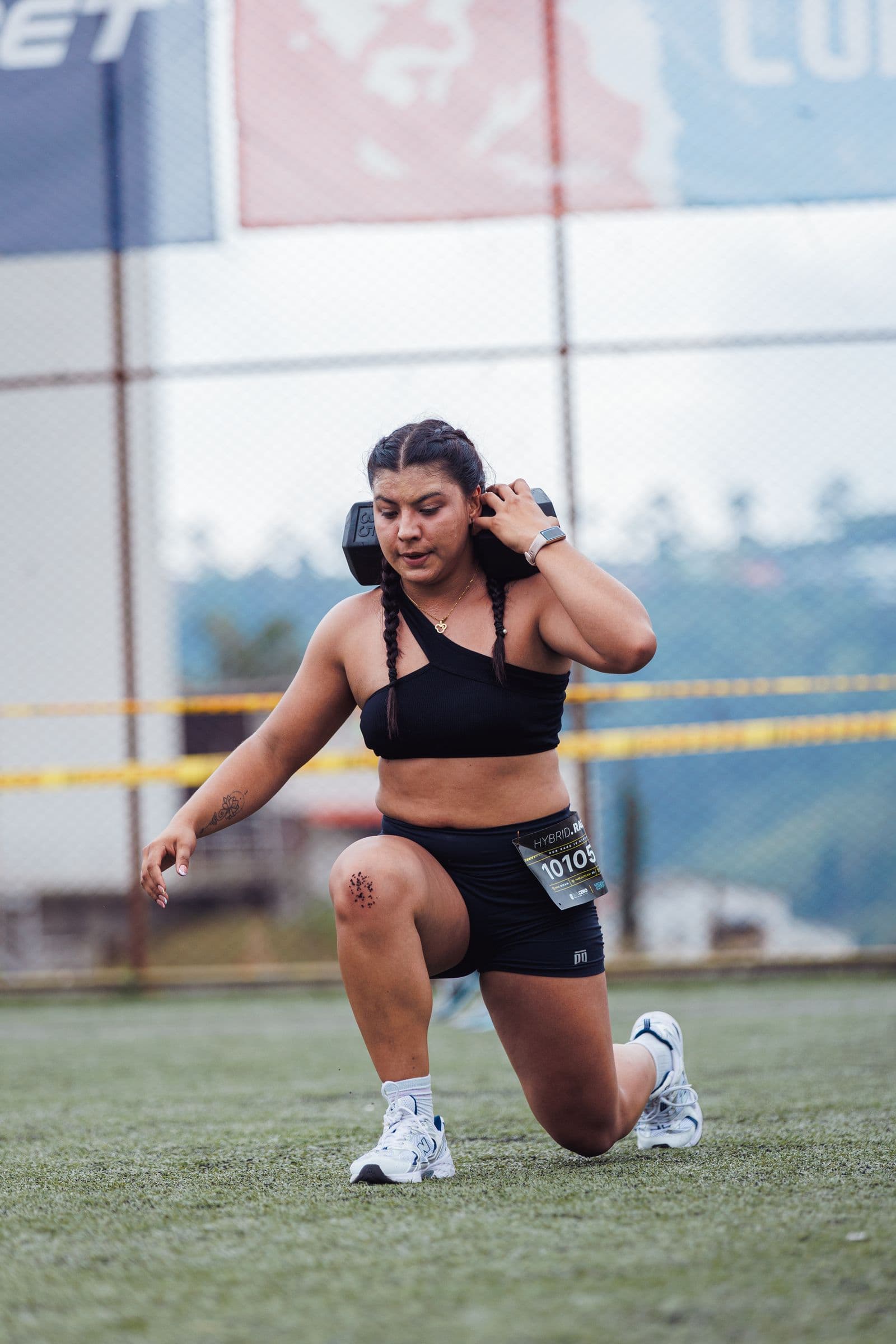
The three gaps the bike leaves
Riding makes you superbly good at one thing: producing smooth, repetitive power in a fixed position with your weight supported. That last clause is the catch. Three adaptations every athlete needs never get the signal:
Bone. The bike carries you, so your skeleton coasts. Systematic reviews of cyclists' bone health are strikingly consistent — dedicated riders, including young racers, show lower bone mineral density than runners and frequently lower than people who don't train at all. If cycling is your only sport, your engine and your skeleton are aging on different schedules.
Single-leg control. Pedaling is symmetric and guided by the cranks; it never asks one leg to stabilize, balance, or land. Then a cyclist steps off a curb, chases a toddler, or tries a winter run — and the control isn't there.
The posterior chain and the position's postures. Hours folded forward shorten hip flexors, round the upper back, and park the glutes. The neck holds extension; the hamstrings and back get long and quiet. The complaints this feeds live in the neck-and-back guide, and no stem swap fully fixes what strength maintains.
The cyclist's menu
Two sessions a week, 20–30 minutes, heavy enough to mean it:
- A squat pattern, loaded — goblet, back, or split squat. Big-gear torque insurance and the spine's best friend.
- A hinge — deadlift or hip thrust. Wakes the glutes the saddle silences; the back-protection lift.
- Single-leg work — step-ups, split squats, single-leg RDLs. The control the cranks never teach.
- Upper-back and neck endurance — rows, face pulls, band pull-aparts. The drop-bar position tax, paid in advance.
- Anti-flexion core — planks, loaded carries, back extensions. Hours of flexion want an opposing vote.
- Impact, in small doses — rope skipping, low hops, pack hikes. This is the bone prescription; brief and regular is exactly how bone likes it.
The injury-prevention evidence behind the menu is the strongest in sports medicine — structured strength work roughly halves overuse injury risk across sports — and the performance research adds the kicker: added strength improves cycling economy and sprinting without making riders heavier. The pros lift. The overuse patterns that fill cycling clinics are mostly capacity problems this menu addresses.
In-season vs. off-season
Off-season is for building: progress the loads, three sessions if you enjoy it, add the impact work while volume is low. In season: hold two short sessions, keep weights steady, nothing new — strength is slow to gain and slow to lose. The week of a century or race, lift light or not at all; novel soreness and a six-hour ride are a bad pairing (the load rules apply to barbells too).
If something already hurts
Strength work is also most of the treatment for cycling's overuse list — but dosing around an irritated knee or an angry back is exactly where generic programs fail. Check whether to ride through it, confirm the fit isn't feeding it, and let a cycling-literate PT tailor the loading: evaluations run $125–$250 cash-pay ($175–$275 in the Bay Area, what PT costs), usually ending with a plan you ride alongside, not a stop order. Bay Area riders can browse cycling-friendly PTs by region.
Frequently asked questions
Sources (5)
- Lauersen JB, et al. The effectiveness of exercise interventions to prevent sports injuries: systematic review and meta-analysis. Br J Sports Med. 2014. — BJSM
- Olmedillas H, et al. Cycling and bone health: a systematic review. BMC Med. 2012. — BMC Med
- Scofield KL, Hecht S. Bone health in endurance athletes: runners, cyclists, and swimmers. Curr Sports Med Rep. 2012. — Curr Sports Med Rep
- Rønnestad BR, Mujika I. Optimizing strength training for running and cycling endurance performance: a review. Scand J Med Sci Sports. 2014. — Scand J Med Sci Sports
- Clarsen B, et al. Overuse injuries in professional road cyclists. Am J Sports Med. 2010. — AJSM
This article is for education only and isn't medical advice. Always talk to a licensed clinician about your specific situation.