
Gym vs Outdoor Climbing: What Each Asks of Your Body
Padded falls and plastic jugs versus sharp crimps and real gravity — and how to transition without a finger bill
Updated October 20263 minute read
Gyms changed climbing's injury profile: per-visit injury rates indoors are low, but padded bouldering invites constant falls and high session density, while outdoor rock holds smaller, sharper crimps and real fall consequences. The transition between the two is a load cliff in both directions — a "V4 gym climber" meeting outdoor V2 crimps is a finger-load spike wearing a modest grade. Drop grades when you change venues, build crimp tolerance before you need it, and treat board climbing as its own intensity category.
Two sports wearing one name
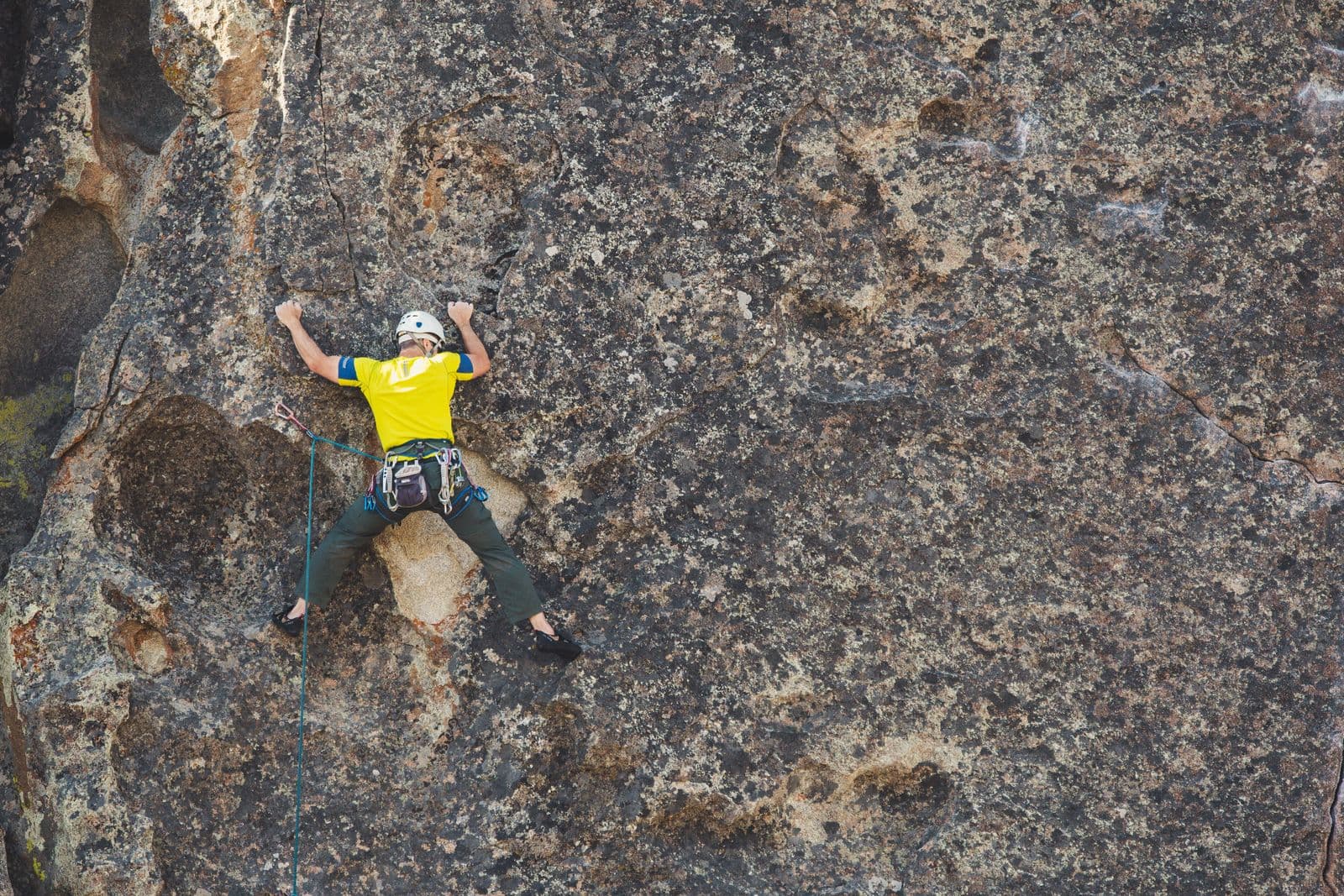
The climbing gym didn't just move the sport indoors — it changed what climbing does to bodies. Most of today's climbers learned on plastic, and the injury research reflects the split: indoor climbing's per-visit acute injury rate is remarkably low, while bouldering — the gym's dominant format — fills trauma units with ankle and wrist injuries from an activity where every attempt ends in a fall. Outdoor rock brings the opposite trade: fewer falls taken, but smaller, sharper holds and consequences the flooring doesn't absorb. Knowing which ledger you're climbing on is half of staying healthy.
What the gym gives — and charges
The gifts are real. Padded floors turn most bouldering falls into non-events. Grades scale load precisely, which makes the gym the best rehab venue in sports (the return-to-climbing plan is built on it). Weather never cancels, routes reset fresh, and beginners learn in hours what crags used to teach in seasons.
The charges are quieter. Convenience invites density: four or five sessions a week is easy indoors and is exactly the overuse arithmetic — fingers, then elbows — that the load-management guide exists for. And padded falls are discounted, not free: bouldering's constant falling still produces the sport's ankle and wrist bill, and a rolled ankle on a mat is still a real rehab project. The workload research's core warning — it's the spike, not the total — applies doubly in a venue this convenient.
What rock gives — and charges
The gifts: footwork honesty (outdoor feet are small, slick, and unmarked — a semester of technique per trip), open-hand features like slopers and cracks that plastic rarely replicates, and pacing that's naturally lower-density: approach hikes and rope logistics cap the attempts per day in a way a gym never will.
The charges: outdoor crimps are smaller, sharper, and less forgiving than anything the setters put up, and the fall zone is whatever you built from the pads you carried. Spotters, pad placement, downclimbing, and inspecting landings before pulling on are the outdoor skillset the gym never teaches.
The transition is the injury
Both directions are load cliffs, and the gym-to-rock direction is the classic: a "V4 gym climber" meeting outdoor V2 crimps is a finger-load spike wearing a modest grade. The grade says easier; the holds say half the edge depth with twice the bite. Transition rules:
- Drop grades outdoors — several of them — and call it strategy. First trips are mileage trips.
- Build crimp tolerance before the trip, not on it. Gradual exposure to smaller edges in training (the grip guide) is the vaccination; the crag is a bad place for a first dose.
- Ramp, don't binge. A three-day weekend of rock after months of plastic is a textbook spike — plan rest days and respect the load rules.
- Going the other way, returning to the gym after an outdoor season: the volume and steepness available indoors is its own spike. Same rules, reversed.
Boards are a third venue
MoonBoard, Kilter, Tension: standardized, steep, mostly bad holds, instant retries. Treat board climbing as its own intensity category — closer to a max-strength gym session than to a climbing session — and budget it like one: counted sessions, real rest between, and not the nightly default. (For growing athletes, maximal board and campus work is off the menu entirely — the parents' guide covers why.)
When the ledger comes due
A finger that's sore after every board night, an elbow that aches into the next morning, or an ankle that's been "almost fine" since a mat fall is a load problem with your name on it. A climbing-literate PT sorts the diagnosis and builds the ramp — how to find one, with evaluations at $125–$250 cash-pay ($175–$275 in the Bay Area; what PT costs, partly recoverable via superbill). Bay Area climbers can browse climbing-friendly PTs by region — gym rats and trad dads alike.
Frequently asked questions
Sources (6)
- Schöffl VR, et al. Acute injury risk and severity in indoor climbing — a prospective analysis of 515,337 indoor climbing wall visits. Wilderness Environ Med. 2013. — Wilderness Environ Med
- Jemmett H, et al. Bouldering-related trauma: injury patterns and operative burden over 10 years at a UK major trauma centre. 2026. — PubMed
- Zieliński J, et al. Epidemiology of musculoskeletal injuries among climbers: a systematic review. 2025. — PubMed
- Gabbett TJ. The training-injury prevention paradox: should athletes be training smarter and harder? Br J Sports Med. 2016. — BJSM
- ChoosePT (APTA). Physical therapy guide: ankle sprain. — ChoosePT
- Woollings KY, et al. Risk factors for injury in sport climbing and bouldering: a systematic review of the literature. Br J Sports Med. 2015. — BJSM
This article is for education only and isn't medical advice. Always talk to a licensed clinician about your specific situation.