
Bouldering Falls: Ankles, Wrists & the Heel-Hook Knee
The gym's padded floors changed climbing's injury math — here's the triage for the landings that go wrong
Updated October 20263 minute read
In the gym era, falls onto mats — not mountains — produce climbing's acute injuries, and they hit three places: ankles rolled on uneven landings, wrists that caught a backward fall, and knees torqued by heel hooks. Triage is simple: an ankle you can bear weight on is probably a sprain; one you can't, or with heel-bone pain after a tall fall, needs an X-ray. A fallen-on wrist with snuffbox tenderness needs a scaphoid X-ray even if it feels like a sprain. Pops and swelling behind the knee during a heel hook earn an evaluation.
The gym changed the injury
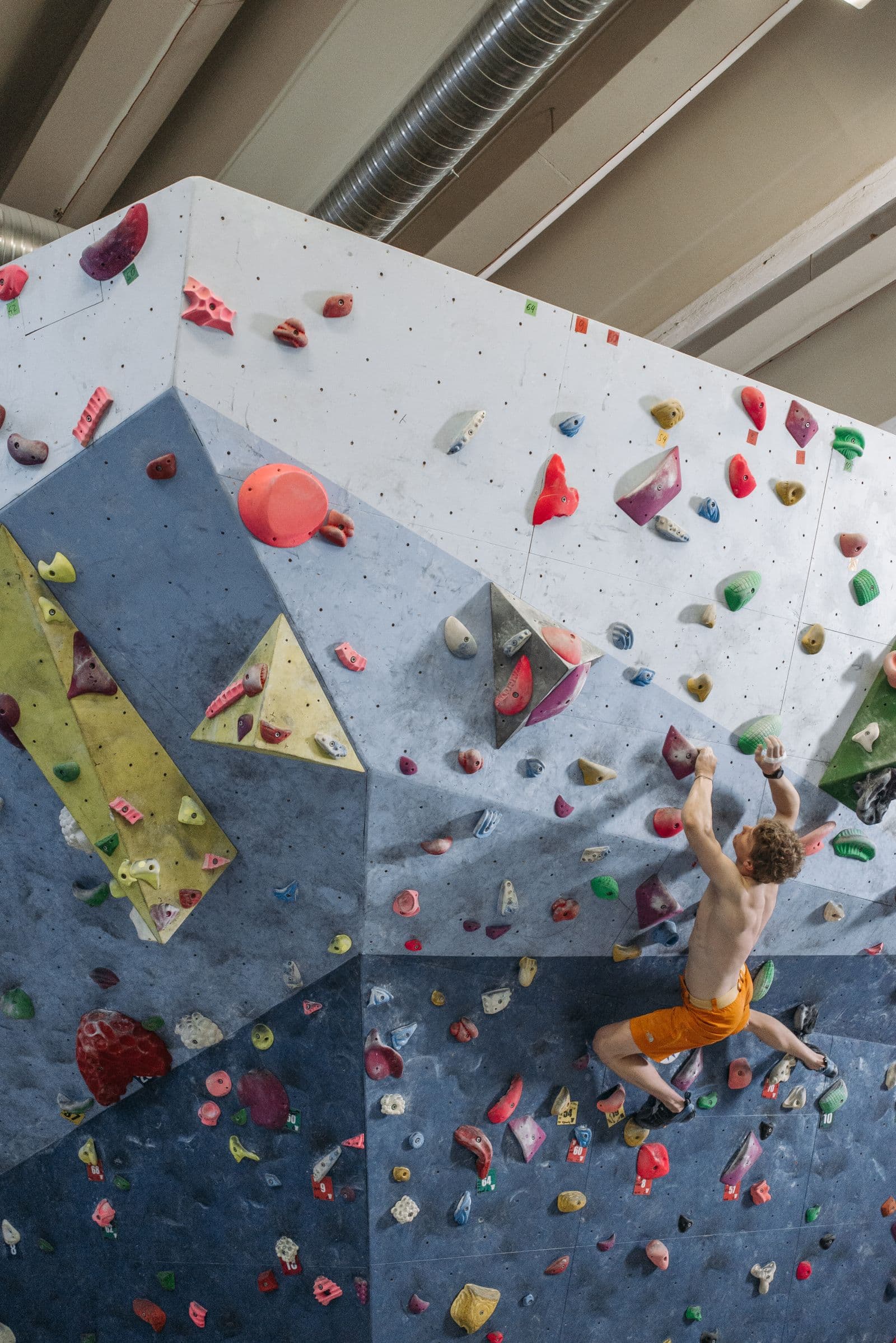
Outdoor climbing's dangers were rockfall and rope. The bouldering gym's danger is simpler: gravity, repeatedly, onto mats — dozens of falls per session as a normal part of trying hard. Prospective bouldering injury research says the result is exactly what you'd expect: most acute injuries happen on the landing, not the wall, and they concentrate in the ankles, the wrists that caught the fall, and — via a mechanism unique to the sport — the heel-hooking knee.
Ankles: the sprain and the one X-ray rule
The classic: landing on the mat's edge, another climber's shoe, or a stray brush, and the ankle rolls under you — a lateral ankle sprain. Triage:
- Can you take four steps? If yes, and tenderness is in the soft tissue below the ankle knob rather than on bone, it's very likely a sprain — manage it actively from day one.
- Can't bear weight, or bone tenderness at either ankle knob or the midfoot: X-ray first.
- Tall fall, pain in the heel itself: say so explicitly at the clinic — heel-bone (calcaneus) injuries are the bouldering-specific fracture, and they don't forgive being walked on for a month.
The epidemiology's least-fun fact: a sprained ankle's biggest risk factor is the previous sprain, because most get rested until walkable and never rebuilt. Rehab past "doesn't hurt" to single-leg hopping-and-balance strong — that's the program a PT builds, and the return-to-climbing guide covers the slab-first road back.
Wrists: the snuffbox rule
A backward fall, a hand thrown down behind you, and the wrist takes bodyweight at full extension. Most such wrists are sprains — but the rule that protects you: tenderness in the anatomical snuffbox (the hollow at the base of the thumb when you extend it) after a fall is a scaphoid fracture until an X-ray says otherwise. The scaphoid's blood supply is fragile, first films can miss it, and a missed one can cost the bone itself — which is why a "sprain" still aching at two weeks goes back for imaging. Climbing-specific wrist research also flags the ulnar side (the pinky side, loaded by slopers and compression): persistent pinky-side pain after a fall is a specialist question, not a tape job. Jammed fingers from the same falls follow the same rules as basketball's.
The heel-hook knee
The third landing injury doesn't involve landing at all: the heel hook — heel up by your head, hamstring pulling at maximum effort in deep flexion — loads the hamstring tendons and the knee's corner structures in a way sports medicine literally wrote papers to describe. A pop or tearing feeling behind or beside the knee mid-hook, swelling, or catching afterward: stop, and get it evaluated rather than foam-rolling it for a month. Partial hamstring-tendon and corner injuries rehab well; fully torn ones are a surgical conversation — grading early is the whole game.
Falling is a skill
The honest prevention section: the mats make falls survivable, not safe. Land feet first, knees soft, accept the backward roll onto the shoulders, and never reach a stiff arm behind you — that's the scaphoid's origin story. Downclimb when the zone is cluttered, spot the topple zones on steep problems, and treat getting-stronger legs (the strength program) as landing equipment. And manage the volume that makes falls sloppy in the first place — tired sessions are when landings go wrong.
After the fall
For the sprains and strains that pass triage, active rehab beats waiting: a climbing-literate PT (how to find one) rebuilds the ankle or wrist to climbing standard and tells you which week slab, volumes, and heel hooks come back. Bay Area climbers can browse climbing PTs by region. Evaluations run $125–$250 cash-pay ($175–$275 Bay Area), most sprain episodes need 6–10 visits, and a superbill often recovers part of the cost (what PT costs).
Frequently asked questions
Sources (6)
- Josephsen G, et al. Injuries in bouldering: a prospective study. Wilderness Environ Med. 2007. — Wilderness Environ Med
- Thompson RN, et al. 'Heel hook' rock-climbing maneuver: a specific pattern of knee injury. Clin J Sport Med. 2011. — Clin J Sport Med
- Schöffl V, et al. The 'Heel Hook' — a climbing-specific technique to injure the leg. Wilderness Environ Med. 2016. — Wilderness Environ Med
- Schöffl V, et al. Wrist injuries in climbers. Am J Sports Med. 2023. — AJSM
- Doherty C, et al. The incidence and prevalence of ankle sprain injury: systematic review and meta-analysis. Sports Med. 2014. — Sports Med
- OrthoInfo (AAOS). Scaphoid fracture of the wrist. — OrthoInfo
This article is for education only and isn't medical advice. Always talk to a licensed clinician about your specific situation.