
Returning to Climbing After an Injury: A Criteria-Based Plan
From big holds to crimps, in the right order — how to come back without the re-injury loop
Updated October 20263 minute read
Good returns to climbing are built on criteria, not calendars: pain-free daily life, then loaded rehab at meaningful intensity, then easy juggy climbing, then volume, then steepness — with crimps, pockets, and hard bouldering last. Climbing is unusually rehab-friendly because grades and hold types scale load precisely; the plan is to use that dial honestly. Each step is judged by the 24-hour rule, and climbers who skip steps don't return faster — they return twice.
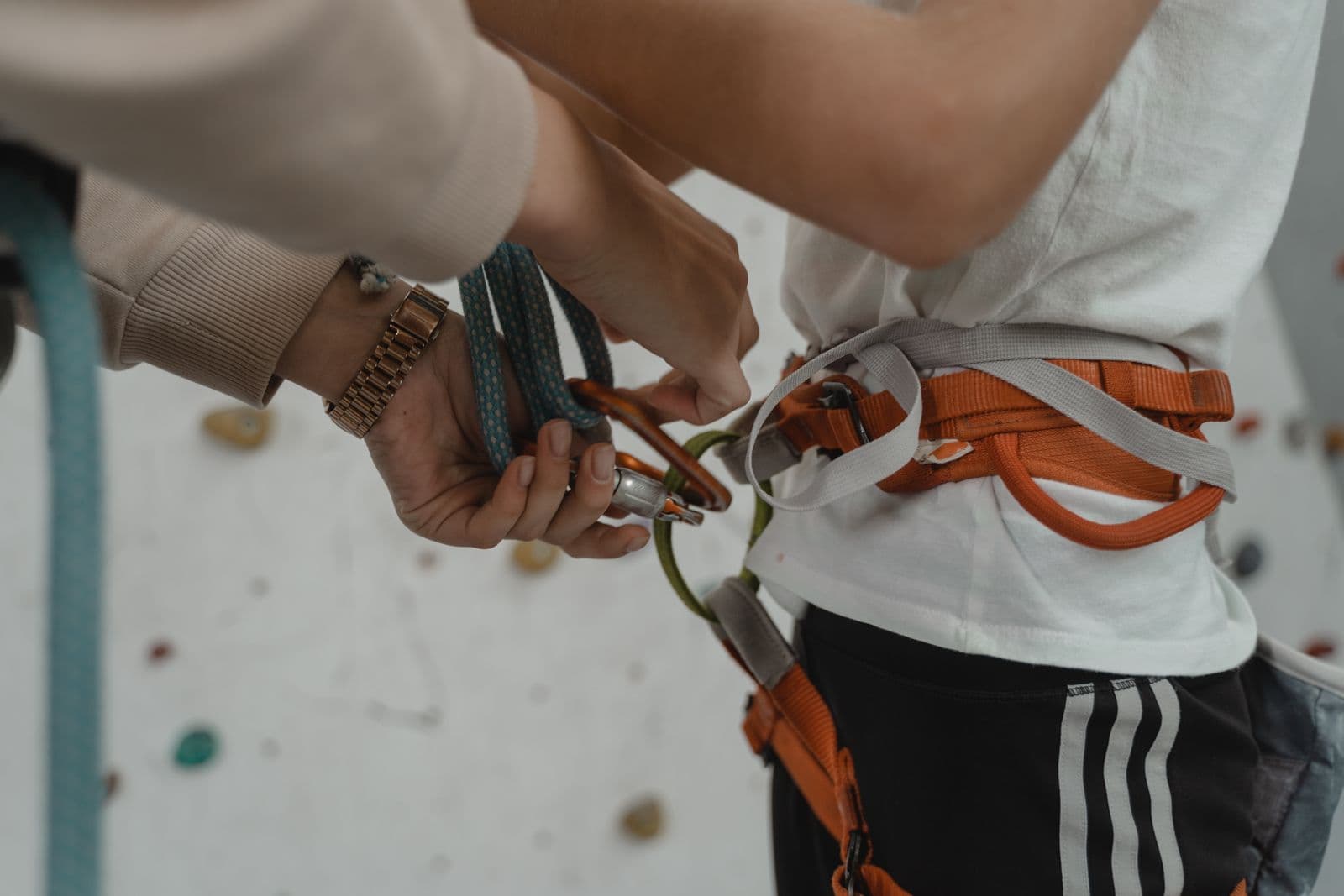
Criteria, not calendars
"Six weeks off, then try climbing" is how most climbing re-injuries are manufactured. Time heals tissue only if load is reintroduced in order — and climbing happens to be the best sport in this library for doing exactly that, because grades, wall angles, and hold types scale load with unusual precision. A V0 jug ladder and a crimpy V5 are different sports as far as your tissue is concerned. The plan is to climb that ladder deliberately.
The milestones, in order
- Pain-free daily life. Keyboards, door handles, grocery bags — no symptoms. Until ordinary gripping is quiet, climbing isn't a conversation.
- Loaded rehab at meaningful intensity. For fingers: progressive loading up to submaximal big-edge hangs, open-handed first — structured loading is how finger strength and tendon capacity are rebuilt. For shoulders: cuff and scapular benchmarks. For ankles after a bouldering fall: hop and landing tests (the falls page covers that road).
- Easy, juggy, vertical climbing. Big holds, big feet, no steepness — think two or three number-grades (or 3–4 V-grades) below your normal warm-up. This is court time, not performance.
- Volume before intensity. More easy mileage, longer sessions, still on friendly holds — capacity first.
- Steepness and smaller holds. Overhangs load fingers and shoulders harder; introduce angle before hold difficulty, not both at once.
- Crimps, pockets, and hard bouldering LAST. For finger returns, grip type is the final gate: open-hand → half-crimp → full crimp, with pockets and campus-style dynamics at the very end. Current pulley-injury guidance follows exactly this grip-and-grade progression.
The 24-hour rule
Every step gets the same referee: how is it the next morning? Fingers especially report overnight — a knuckle that's stiffer and puffier at breakfast is yesterday's step saying it was too big. Mild effort-stiffness that's gone by morning: carry on. Symptoms equal or worse a day later: repeat the previous level. This one rule replaces most of the guesswork.
When it flares
It probably will once — that's finding the tissue's current ceiling, not a catastrophe. The protocol: drop back two steps, not to zero. Hold the lower level until the 24-hour rule passes twice, then climb again. A cycle of weekly flares, though, means the plan or the diagnosis needs professional eyes.
Per-injury wrinkles
- Pulleys and finger injuries: grade AND grip type are the budget. H-tape can support the return; open-hand climbing comes back long before full crimps, and the finger guide covers which injuries need imaging before any of this starts.
- Elbows: the antagonist and loading work that fixed it (climber's elbow) continues after you're back — stopping rehab the week climbing resumes is the classic elbow relapse.
- Shoulders: gastons, wide compression moves, and big shouldery slopers come back last (the shoulder guide).
- Post-fall ankles and wrists: dynamic drops and committing topouts come last; the gym's thick pads make it the right place to rebuild (the falls page).
Grade ego, handled
Returning two or three grades below your project level isn't a setback — it IS the plan, and it's temporary precisely because it's honest. The climbers who tape up and jump straight back on their project are the ones who turn a six-week pulley strain into a six-month saga.
Getting help
A climbing-literate PT turns this template into your plan: which milestone you're actually at, the loading that rebuilds the tissue, and a grip-and-grade budget that fits your gym. Evaluations run $125–$250 cash-pay ($175–$275 in the Bay Area — what PT costs, often partly reimbursable via superbill), and here's how to find one who speaks climbing. Bay Area climbers can browse climbing-friendly PTs by region.
Frequently asked questions
Sources (5)
- Ardern CL, et al. 2016 Consensus statement on return to sport from the First World Congress in Sports Physical Therapy, Bern. Br J Sports Med. 2016. — BJSM
- Manjunathan A, et al. Climbing pulley injuries: evaluation, treatment and prevention. 2026. — PubMed
- Gilmore NK, et al. Effects of different loading programs on finger strength in rock climbers. Sports Med Open. 2024. — Sports Med Open
- Silbernagel KG, et al. Continued sports activity, using a pain-monitoring model, during rehabilitation in patients with Achilles tendinopathy. Am J Sports Med. 2007. — AJSM
- Zieliński J, et al. Epidemiology of musculoskeletal injuries among climbers: a systematic review. 2025. — PubMed
This article is for education only and isn't medical advice. Always talk to a licensed clinician about your specific situation.