
Elbow Pain From Climbing: Inner, Outer & Front of the Elbow
Climber's elbow decoded by location — and why the fix is loading and antagonist work, not rest
Updated October 20262 minute read
Climbers overload elbows from three directions: inner-elbow pain (golfer's elbow) from gripping volume, outer-elbow pain (tennis elbow) from the extensors that stabilize every grip, and front-of-elbow pain (brachialis/biceps) from lock-offs and steep pulling. All three are tendon problems that respond to progressive loading plus antagonist training — not to rest alone, which feels better until the first session back. Pain that hasn't improved after a structured two-week trial deserves a PT evaluation.
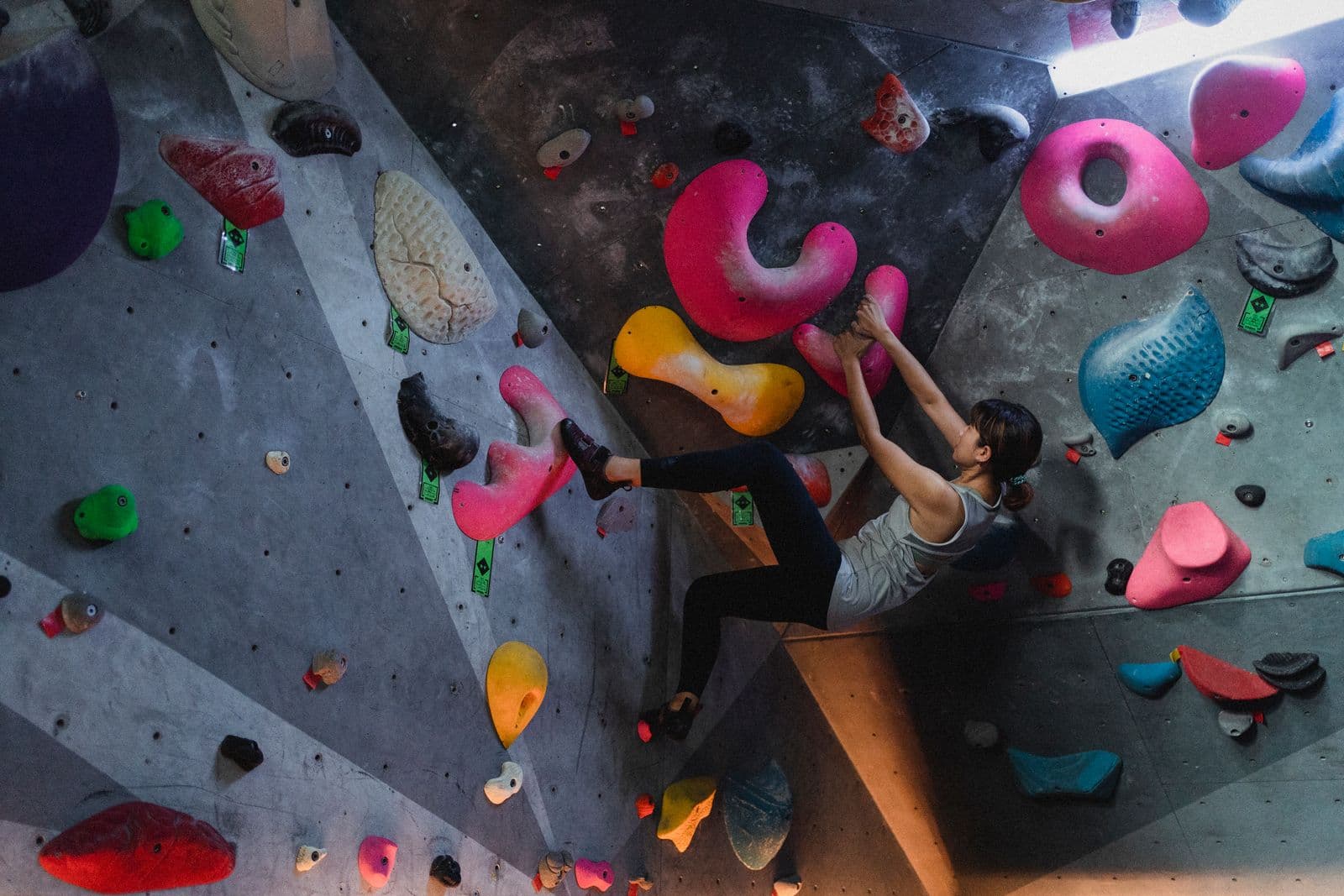
Three elbows, by location
"Climber's elbow" is really three different tendons complaining, and the sore spot tells you which:
- Inner elbow (golfer's elbow): pain at the bony knob on the pinky side, worse with gripping and resisted wrist flexion. The climber's classic, because the finger flexors that do all your gripping anchor there — the deeper dive lives on our golfer's elbow page.
- Outer elbow (tennis elbow): pain at the outer knob, worse with resisted wrist extension. Counterintuitive in a pulling sport until you realize the extensors fire isometrically to stabilize the wrist in every grip you take — they do huge volume without ever being trained (the condition in full).
- Front of elbow: a deep ache where the biceps and brachialis cross the joint, earned from lock-offs, steep board climbing, and campus pulling — the bent-arm strength positions the sport is built on.
How climbers earn them
The pattern behind nearly every case is a load spike on a tendon that wasn't ready: a new hangboard or campus block, a season of board climbing, a style shift toward steep and crimpy, or simply more gym days per week (how to spot a spike before it bites). Two structural quirks make climbers especially eligible: the sport's strength curve is almost all pulling and gripping with nothing pushing back, and a static, locked-off style holds tendons under long isometric load. Emergency-department epidemiology shows most climbing injuries are these overuse upper-limb patterns, not falls.
Loading beats rest
The tendinopathy evidence is unusually clear. Waiting it out loses: in the landmark tennis-elbow trial, exercise-based care beat both wait-and-see and corticosteroid injection at a year — the injection group actually fared worst long-term. Modern guidelines treat progressive loading as the backbone of care, dosed to the tendon's irritability: isometrics when it's cranky, then heavier isotonic work, then the grip-intensive positions last.
Translated to climbing: you usually don't stop climbing — you trim the provocative fraction (crimps and steep lock-offs for inner elbow; volume for outer) while the loading program rebuilds capacity, the same keep-moving logic as the finger traffic-light rules.
The antagonist prescription
The most climbing-specific part of the fix: train what the sport doesn't. Pushing work (push-ups, overhead pressing), wrist extensor loading, and reverse-grip work rebalance the forearm and unload the complaining side — injury-prevention meta-analysis shows strength training roughly halves overuse injury risk, and the elbow is where climbers cash that in. The full program lives in antagonist and strength training for climbers.
The two-week trial
Self-managing is reasonable for mild, recent cases: trim the provocative styles, start gentle loading, add antagonist work. Give it two weeks. If pain is trending down, continue. If it's flat or worse — or there's night pain, numbness into the fingers, or weakness you can't explain — get evaluated. A climbing-literate PT (how to find one) grades the tendon, doses the program, and keeps you on the wall while it heals; Bay Area climbers can browse climbing PTs by region. Evaluations run $125–$250 cash-pay ($175–$275 Bay Area), elbow episodes typically need 6–12 visits spread over a tendon-honest timeline, and a superbill plus out-of-network reimbursement often recovers part of it (what PT costs).
Frequently asked questions
Sources (6)
- Coombes BK, et al. Management of lateral elbow tendinopathy: one size does not fit all. J Orthop Sports Phys Ther. 2015. — JOSPT
- Bisset L, et al. Mobilisation with movement and exercise, corticosteroid injection, or wait and see for tennis elbow: randomised trial. BMJ. 2006. — BMJ
- Vuvan V, et al. Unsupervised isometric exercise versus wait-and-see for lateral elbow tendinopathy. Med Sci Sports Exerc. 2020. — MSSE
- Lauersen JB, et al. The effectiveness of exercise interventions to prevent sports injuries: systematic review and meta-analysis. Br J Sports Med. 2014. — BJSM
- Sabbagh RS, et al. Epidemiology of indoor and outdoor rock climbing injuries presenting to US emergency departments. J Sports Med Phys Fitness. 2021. — J Sports Med Phys Fitness
- OrthoInfo (AAOS). Tennis elbow (lateral epicondylitis). — OrthoInfo
This article is for education only and isn't medical advice. Always talk to a licensed clinician about your specific situation.