
Can I Climb Through Finger Pain? The Rules Climbers Actually Use
A traffic-light system for cranky fingers — and the pop you never climb on
Updated October 20263 minute read
General finger stiffness at 0–3 out of 10 that warms up, isn't focal to one spot, and settles by the next morning is usually workable with open-hand grips and easier climbing. Pain that localizes to one finger or one pulley spot, builds session over session, or stiffens more each morning means cut intensity and start a loading plan. A pop mid-move, pain at the finger base when you press on it, or any focal finger pain in a teenager means stop and get assessed now.
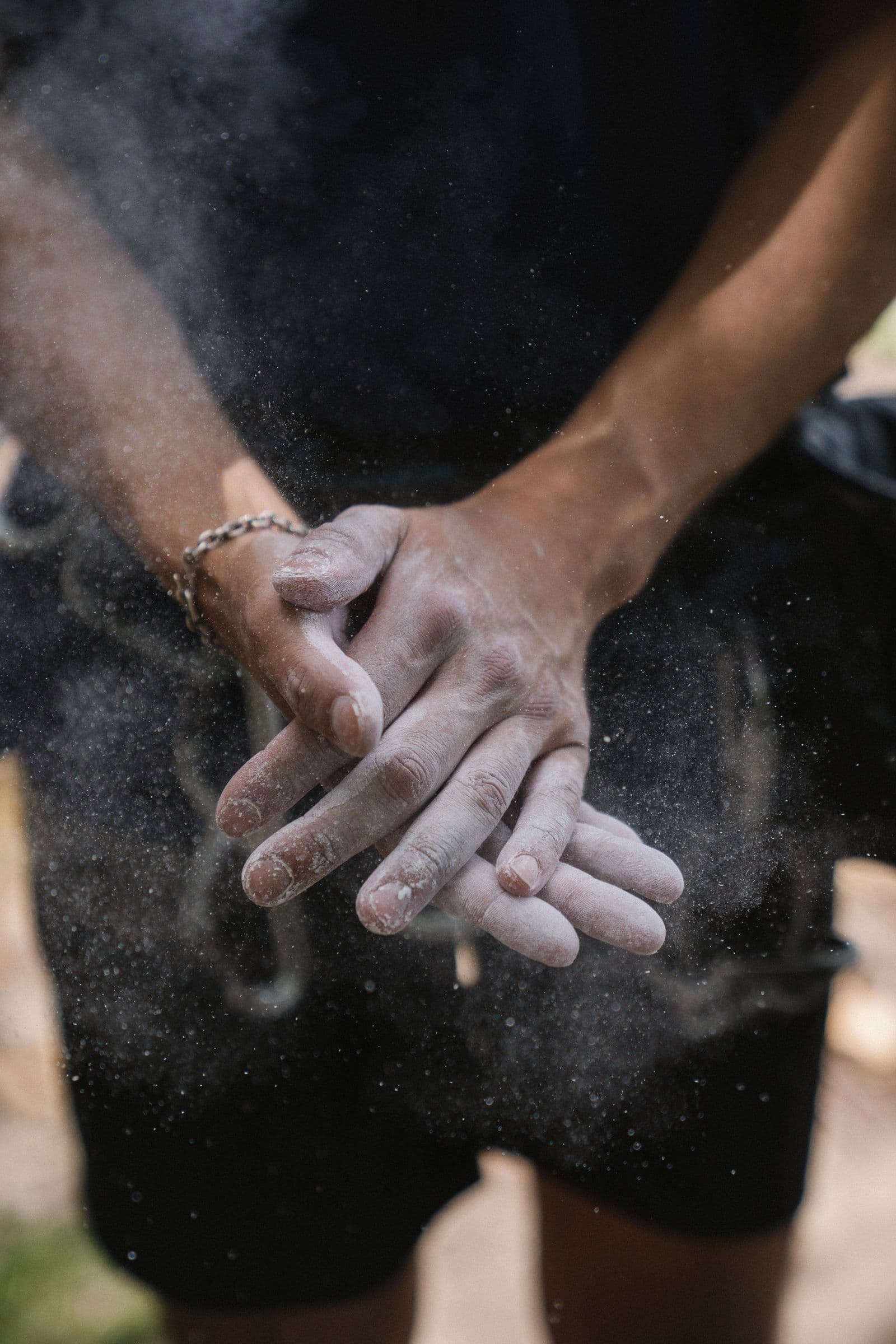
The traffic-light rules
Climbers don't want "listen to your body" — they want to know whether tonight's session is on. Here's the system, built on the same pain-monitoring research PTs use across tendon sports, tuned for the tissue that makes climbing climbing:
Green — climb, with the dials turned down. General stiffness or 0–3/10 soreness across several fingers that warms up within a few routes, doesn't point to one spot, and is back to baseline by the next morning. Climb on — but make the session earn trust: open-hand and half-crimp grips, a grade or two below your limit, no campus board, no hangboard, no crimpy projects. The grip guide explains why grip choice is the biggest dial you own.
Yellow — modify now. Any of: pain above 3/10, pain that localizes to one finger or one spot at the base of a finger, pain building session over session, or morning stiffness that's growing week over week. Finger injuries dominate climbing's injury statistics precisely because climbers climb through this stage. Cut intensity (not just volume), switch to open-hand climbing, start a graded loading plan, and put a two-week clock on it: no progress means book an evaluation.
Red — stop today. A pop or crack mid-move; sharp pain at the finger base that hurts to press; a visible gap or "bowstringing" of the tendon when you crimp; a finger you can't straighten; or any focal finger pain in a teenager (growth plates outrank every rule on this page — the parents' guide explains the stricter standard). These earn an assessment now, because grading a pulley injury early is what separates a few weeks of smart rehab from a long, avoidable layoff.
The trap: tendons warm up
The cruelest feature of finger trouble is that it often improves as the session goes on — the cranky tendon warms, the pain fades, you pull hard, and the bill arrives tomorrow morning. That's why the next-morning report matters more than how the third boulder felt. Track it like a ledger: pain that shows up earlier each session, or stiffness that lasts longer each morning, is winding up — whatever the number says mid-session.
The grade-ego clause
Most serious finger injuries in the clinic share a backstory: a climber who knew the finger was cranky and tried their project anyway. One flash attempt on a tweaky pulley can cost a season; two weeks of open-hand discipline costs two weeks. The load-management guide covers the spikes that set these stories up, and the honest math never changes: the project will still be there.
What "modify" actually means
Not zero climbing — smarter climbing. Open-hand everything. Slabs, jugs, and technique mileage instead of board sessions. Feet-first climbing (every gram your footwork carries is a gram your fingers don't — see grips and technique). Volume on big holds while the finger calms, plus the antagonist and loading work that rebuilds capacity instead of just waiting.
When to bring in a PT
Two weeks of yellow that isn't clearing, any red flag, or a finger that re-tweaks every time you return to crimps — those earn an evaluation. A climbing-literate PT ($125–$250 cash-pay, $175–$275 in the Bay Area, no referral needed in most states) can grade the injury, set the loading plan, and tell you which grips are open this month — how to find one covers the vetting, and what PT costs covers the money. Bay Area climbers can start with the local climbing PT directory.
Frequently asked questions
Sources (5)
- Silbernagel KG, et al. Continued sports activity, using a pain-monitoring model, during rehabilitation in patients with Achilles tendinopathy. Am J Sports Med. 2007. — AJSM
- Jones G, et al. A critical review of the incidence and risk factors for finger injuries in rock climbing. Curr Sports Med Rep. 2016. — Curr Sports Med Rep
- Schweizer A. Biomechanical effectiveness of taping the A2 pulley in rock climbers. J Hand Surg Br. 2000. — J Hand Surg Br
- Schöffl V, et al. Injury trends in rock climbers: evaluation of a case series of 911 injuries between 2009 and 2012. Wilderness Environ Med. 2015. — Wilderness Environ Med
- MedlinePlus. Finger injuries and disorders. — MedlinePlus
This article is for education only and isn't medical advice. Always talk to a licensed clinician about your specific situation.