
Low Back Pain & Skiing: The Drive, the Moguls & the Monday After
Why the Tahoe pattern — four hours in the car, then eight hours on snow — is a back-pain recipe, and what actually fixes it
Updated October 20263 minute read
Skiing's back pain is usually a load story, not a damage story: a long stiff drive, then a full day of flexed-posture skiing, chop absorption, and lift-line standing, repeated on consecutive days by a body that trained for none of it. Most episodes are muscular and settle with movement and graded loading — rest is not the treatment. The exceptions have names: pain shooting down a leg, numbness, or a teenager with persistent one-sided back pain all deserve assessment, the teen most urgently of the three.
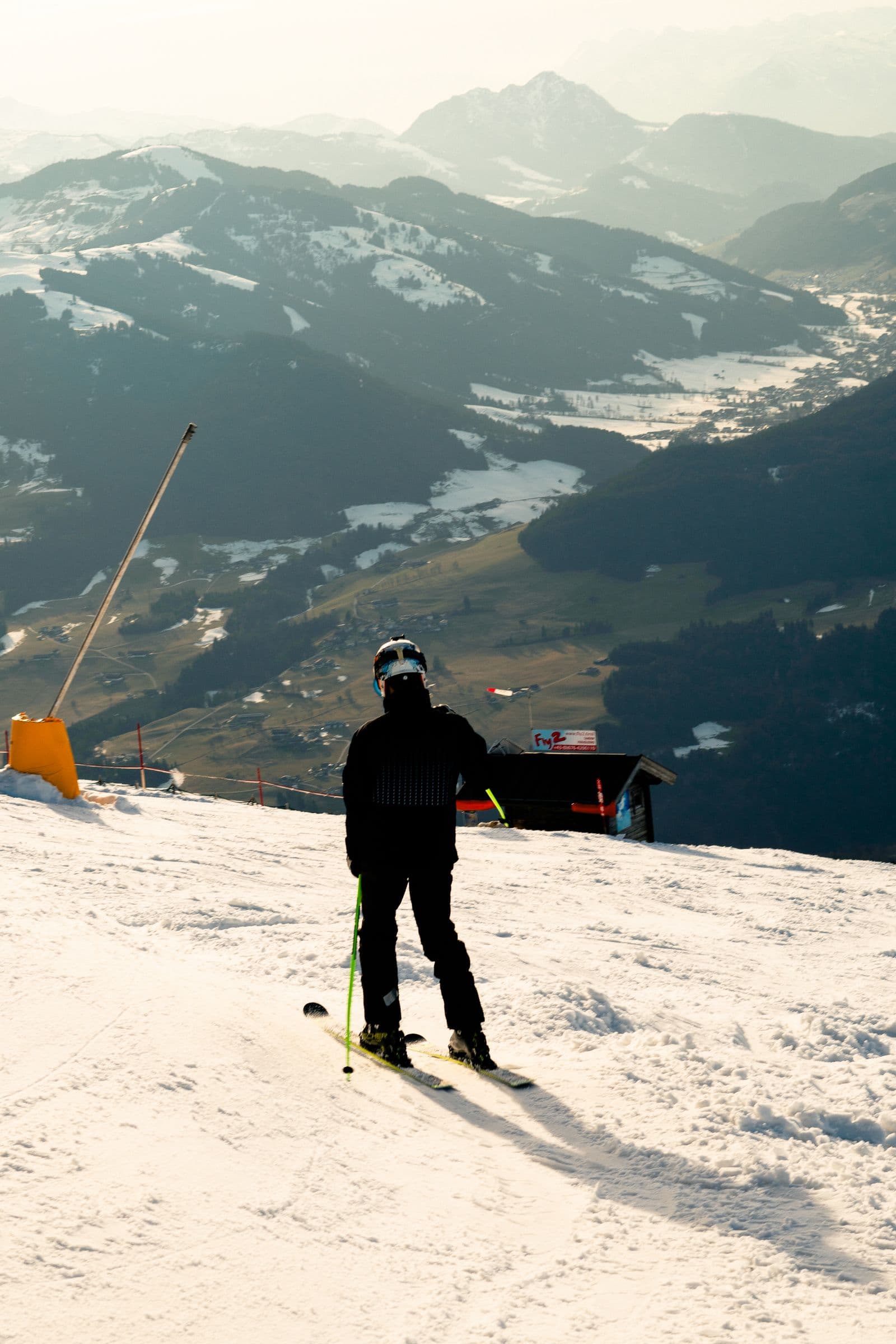
The Bay Area back-pain recipe
The Tahoe weekend is practically engineered for low backs: three to four hours folded into a car seat, an early alarm, a day of skiing spent in varying degrees of flexion — absorbing chop, holding a tuck, bracing through crud — punctuated by lift-line standing in ski boots, repeated the next morning, then the drive home. None of it is dangerous. All of it is load, and most skiers' off-season training covers almost none of it.
So the classic presentation isn't an injury moment at all: it's the back that tightens on the drive home and seizes Monday morning, or the day-two stiffness that never quite warms up. This is overwhelmingly muscular — a capacity problem (the lumbar strain guide covers the acute version) — and the evidence on what fixes it is unusually clear.
What actually works (and what doesn't)
Rest is not the treatment. Beyond the first day or two of a spasm, prolonged rest deconditions exactly the tissues that were too weak for the job. The strongest evidence in all of back-pain care points the other way: exercise therapy is the best-supported treatment for persistent low back pain, and exercise is also the best-supported prevention — a large meta-analysis found exercise programs cut back-pain episodes substantially, where passive approaches prevented nothing.
For a skier, "exercise" means specifics:
- Hinge strength — deadlift-pattern loading that teaches the spine to tolerate flexed load, because skiing is hours of it
- Trunk endurance — side planks and carries beat crunches; absorption is an endurance event
- Hip strength and mobility — hips that can't flex and rotate send their work upstairs to the lumbar spine
- Graded re-entry — after an episode: groomers before moguls, half-days before full, two days on only when one day stops leaving a mark
The season-prep guide turns this into a program, and load management covers the in-season half: fatigue, consecutive days, and the late-day runs where sloppy absorption happens.
The exceptions with names
Three stories change the plan:
- Leg symptoms. Pain past the buttock — especially below the knee — tingling, numbness, or weakness points at nerve involvement (sciatica patterns). Assessment, not stoicism.
- The constant ache. Pain unchanged by position or time of day, night pain, fever, or weight loss — medical review.
- The teenager. This one gets its own rule. A hard-training adolescent — race team, freestyle, park laps — with persistent, focal, one-sided back pain, worse in arched-back extension, is the textbook story for a pars stress injury (spondylolysis). Recent imaging research in young athletes with back pain shows these stress injuries are common and sport-patterned — and a stress injury caught early heals with modified load, while one ignored for a season can become a stress fracture that doesn't. Persistent teen back pain gets assessed, promptly, full stop.
Getting the right help
A spine-literate sports PT separates the capacity problem from the nerve problem, coordinates imaging for the stories that demand it, and builds the hinge-and-endurance program that makes next season's drive-and-ski weekend boring — here's how to find one, and Bay Area skiers can browse ski-friendly PTs by region. Evaluations run $125–$250 cash-pay ($175–$275 in the Bay Area), most episodes resolve in 6–12 visits with home programming between, HSA and FSA funds apply (HSA/FSA rules), and California's direct access means no referral is needed to start.
Frequently asked questions
Sources (6)
- Hayden JA, et al. Exercise therapy for chronic low back pain. Cochrane Database Syst Rev. 2021. — Cochrane
- Steffens D, et al. Prevention of low back pain: a systematic review and meta-analysis. JAMA Intern Med. 2016. — JAMA Intern Med
- Kriz PK, et al. Pars interarticularis and pedicle stress injuries in young athletes with low back pain. Am J Sports Med. 2024. — AJSM
- Deibert MC, et al. Skiing injuries in children, adolescents, and adults. J Bone Joint Surg Am. 1998. — JBJS
- AAOS OrthoInfo. Low back pain. — OrthoInfo
- MedlinePlus. Back pain. — MedlinePlus
This article is for education only and isn't medical advice. Always talk to a licensed clinician about your specific situation.