
Skier's Thumb & Snowboarder's Wrist: The Hand Injuries of the Mountain
Why "just a sprained thumb" can need urgent attention, and the one piece of snowboard protection with real evidence behind it
Updated October 20263 minute read
Fall on snow and your hands pay: skiers tear the thumb's ulnar collateral ligament on a planted pole (skier's thumb), and snowboarders break wrists bracing falls. A thumb that's weak and painful pinching needs assessment within days — complete tears can trap a tissue fold (the Stener lesion) that blocks healing and needs surgery — while most partial tears heal well with bracing and graded loading. For snowboarders, wrist guards are the rare piece of protective gear with trial evidence behind it.
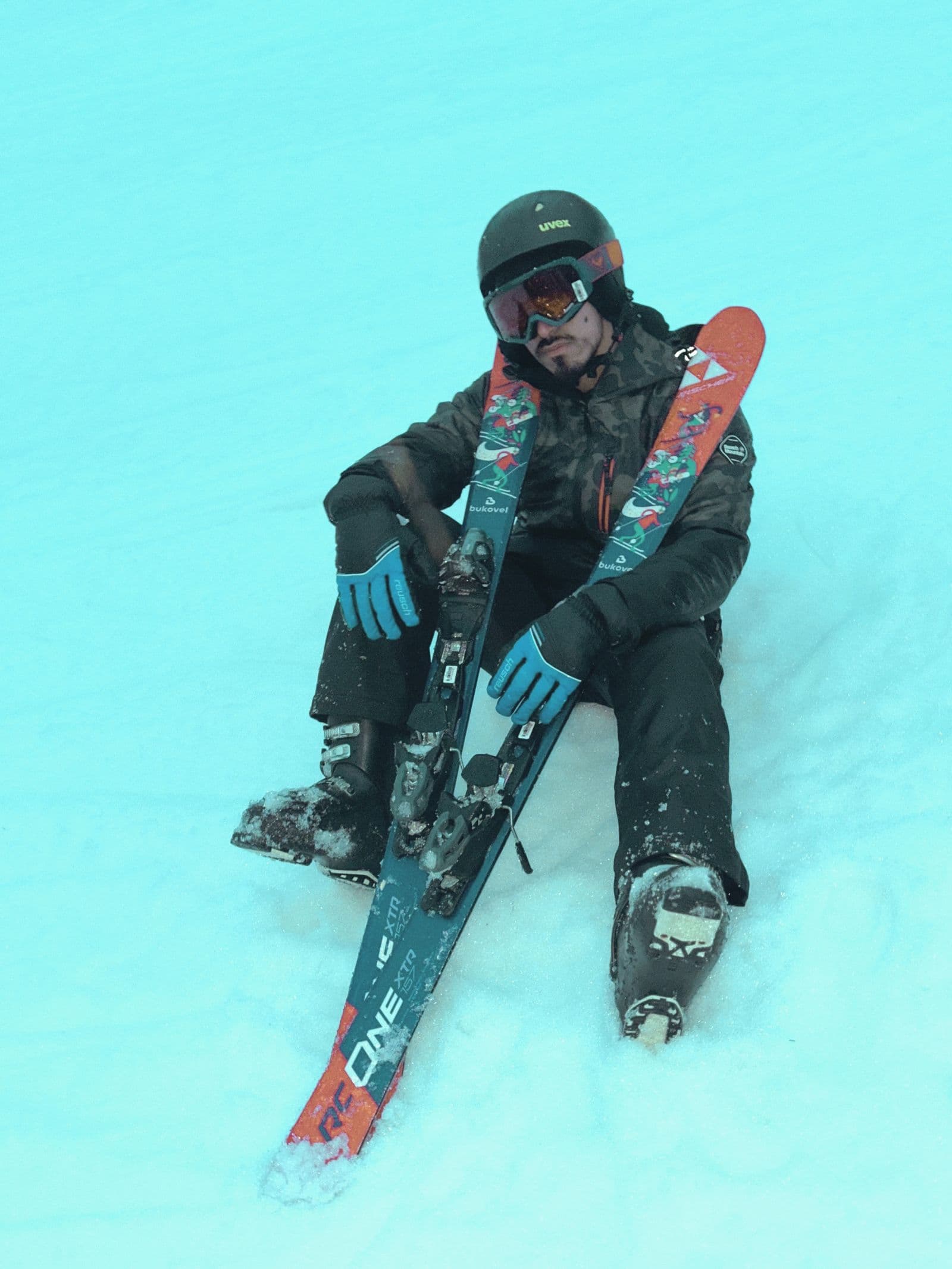
The mountain's two hand injuries
Snow sports split their hand injuries by equipment. Skiers fall holding poles, and the pole strap levers the thumb backward and outward — tearing the ulnar collateral ligament (UCL) at the thumb's base. "Skier's thumb" is one of the most common ski injuries, period. Snowboarders fall with both hands free and brace — so their signature is the wrist: sprains and fractures from the instinctive hands-out landing, concentrated among beginners.
Skier's thumb: why "just a sprain" is the dangerous phrase
The UCL is what makes pinching strong — car keys, jar lids, gripping a pole. The injury story: a fall with the pole planted, pain and swelling at the base of the thumb on the index-finger side, and — the tell — weak or painful pinch.
The spectrum matters:
- Partial tears (most cases): painful, stable-ish thumb. These heal well — bracing roughly 4–6 weeks with graded pinch and grip loading layered in, hand therapy guiding the progression.
- Complete tears: a loose, unstable thumb. Here's the honest catch: in a complete tear, a fold of tissue can slip between the torn ligament ends — the Stener lesion — and once it's there, the ligament physically cannot reattach. No amount of bracing fixes it; it's a surgical repair, and it goes better done within weeks, not months.
That's why the rule is assessment within days, not "see how it feels in a month." Clinical examination by experienced hands grades most of these well, with ultrasound or MRI settling the unstable ones (the condition guide covers gripping pain more broadly). A chronically loose, weak thumb from a missed tear is a genuinely disabling outcome from a "minor" injury — and it's preventable with one timely exam.
Snowboarder's wrist: the FOOSH problem
Fall On OutStretched Hand — FOOSH — is the snowboard injury engine. The spectrum runs from wrist sprains through buckle fractures in kids to the adult distal radius fracture. Red flags that mean same-day X-ray: bony point tenderness, fast swelling, any deformity — and the sneaky one, snuffbox pain (the hollow at the thumb side of the wrist), which flags a possible scaphoid fracture that first-day X-rays can miss.
Here's the rare good-news evidence story: wrist guards work. A randomized trial of snowboarders found guards substantially cut wrist injuries, and a systematic review backs it. Beginners — whose falls are most frequent and least controlled — benefit most. Pair guards with learning to fall (fists, not palms; crouch low when losing balance) and the sport's biggest injury category becomes meaningfully smaller.
After the cast or splint comes the part people skip: rebuilding grip strength, wrist extension, and weight-bearing tolerance — push-up position, pressing off the snow — with graded loading. Skipping it is why "my wrist was never the same" stories exist.
Getting the right help
A hand-literate sports PT (or hand therapist, for the complex ones) grades the injury, coordinates imaging when the story demands it, and runs the loading progression — here's how to vet one, and Bay Area snow-sports athletes can browse ski and snowboard-friendly PTs by region. Evaluations run $125–$250 cash-pay ($175–$275 in the Bay Area), most braced UCL and post-fracture rehabs fit in 6–12 visits with home work between, and a superbill often recovers part of the cost (what PT costs). Preseason? The prep guide includes the falling-technique homework that protects hands in the first place.
Frequently asked questions
Sources (6)
- Mahajan M, Rhemrev SJ. Clinical evaluation vs magnetic resonance imaging of the skier's thumb: a prospective cohort. Eur J Radiol. 2016. — Eur J Radiol
- Sng WJ, et al. Stener lesion: an uncommon variant of skier's thumb. Am J Phys Med Rehabil. 2020. — Am J Phys Med Rehabil
- Rønning R, et al. The efficacy of wrist protectors in preventing snowboarding injuries. Am J Sports Med. 2001. — AJSM
- Russell K, et al. The effect of wrist guards on wrist and arm injuries among snowboarders: a systematic review. Clin J Sport Med. 2007. — Clin J Sport Med
- AAOS OrthoInfo. Sprained thumb. — OrthoInfo
- MedlinePlus. Wrist injuries and disorders. — MedlinePlus
This article is for education only and isn't medical advice. Always talk to a licensed clinician about your specific situation.