
The Junior Crew Parent's Guide: Growing Spines, Rib Literacy & Erg Scores
What every Bay Area crew family should know about backs, ribs, growth spurts, and the 2k machine
Updated October 20263 minute read
Junior crew is a demanding year-round pathway, and its two injuries worth real vigilance live in growing tissue: the teen back-pain rule (persistent, point-able low-back pain in a rowing teen gets assessed promptly — stress-fracture territory, not stretching territory) and rib stress literacy. Add growth-spurt technique wobble, honest limits on training hours, sore-vs-hurt vocabulary, and perspective on erg scores, and most junior rowing careers run long and healthy.
The scene, honestly
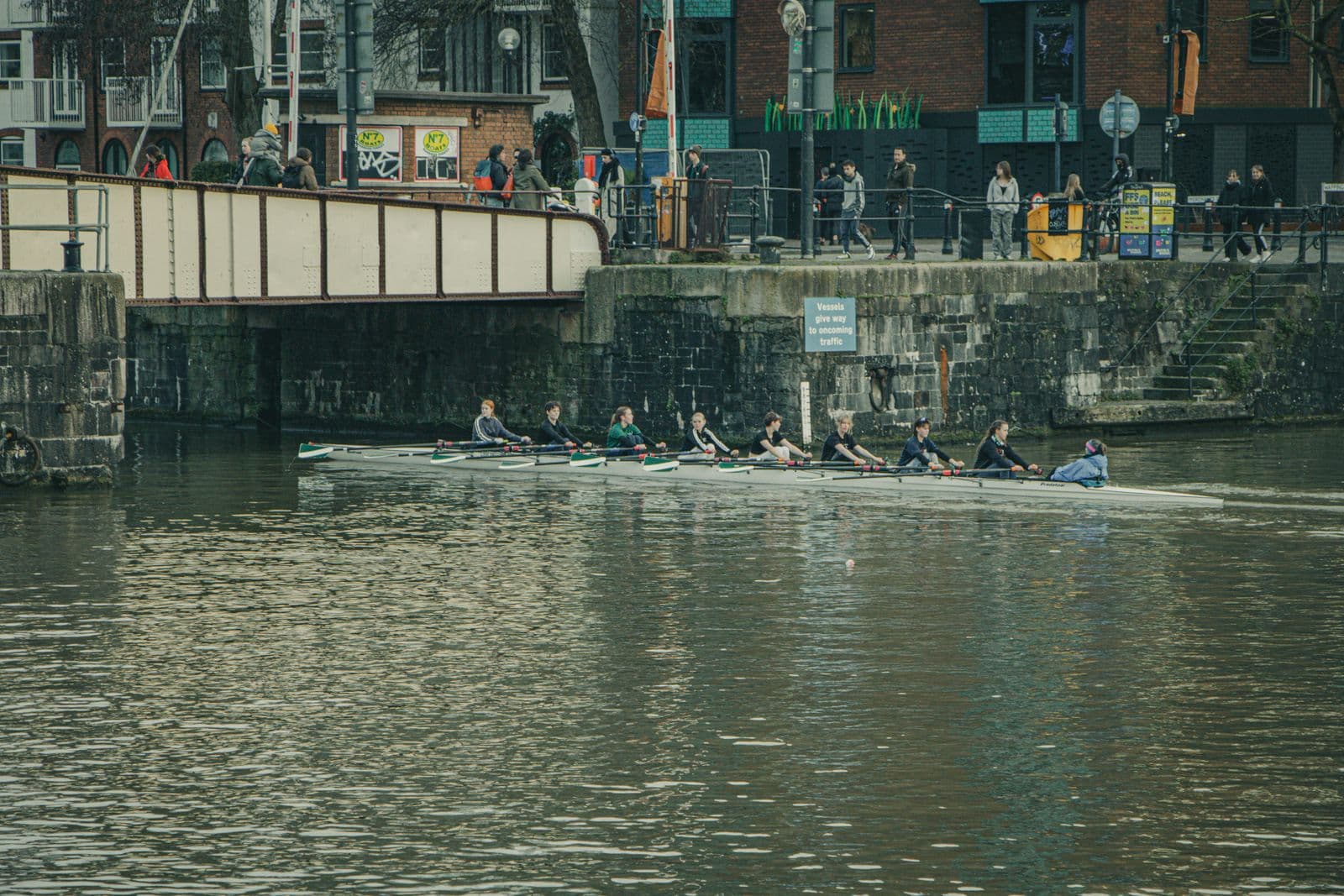
Bay Area junior crew is a serious pathway: estuary and bay water that rows year-round, clubs that send boats to Youth Nationals, and a recruiting pipeline that gets families' attention. The sport gives teenagers extraordinary things — fitness, discipline, a team that shows up at 5 a.m. The exchange rate is training density: long loaded sessions, winters on the erg, and a growing body doing all of it. Injury studies of elite junior rowers find most problems are overuse, led by the low back and knee — which means most are preventable with load sense and early reporting.
Two injuries deserve a parent's actual vigilance, because both live in growing tissue and both punish "push through it."
The teen back-pain rule
A growing spine under repeated loaded flexion and extension can develop a pars stress injury — a stress reaction or fracture in the back of the vertebra (the condition behind the terms spondylolysis and, when it slips, spondylolisthesis). It presents as exactly the thing teams normalize: "my back hurts after practice."
The rule: persistent, focal low-back pain in a rowing teenager — pain they can point to with one finger, pain that extension makes worse, pain beyond two weeks or changing their stroke — stops training through it and gets assessed promptly. That's X-ray/MRI territory, not stretching territory. Caught early, these heal well with rest and a graded return; rowed through, they can mean months off or a permanent defect. The rowing back guide covers the adult version; the teen version simply has a lower threshold for imaging.
Rib literacy
Rowing is the signature sport for rib stress injuries, and juniors ramping load fast are not exempt. Teach the tell — focal rib pain with deep breaths, coughs, or pressing — and make reporting it on day one a team virtue. Weeks versus a season is decided in that first conversation.
Growth spurts and technique wobble
A rower who grows three inches in a year is re-learning their levers: the catch gets deeper, the drive sequencing wobbles, and load lands where technique leaks. During visible growth spurts, smart programs hold load steady or trim it, double down on technique rows, and wait out the wobble — the strength guide covers the hinge work that protects a growing back.
Load, hours, and the off-season
- Hours ≤ age per week of organized training is the standard overuse screen from youth sports medicine.
- One true rest day a week, every week.
- A real off-season — the specialization research is consistent that teens who play varied sports end up more durable, and crew's aerobic base transfers from almost anything.
- Sore vs hurt vocabulary: soreness is two-sided, diffuse, and fades in 48 hours; "hurt" is one-sided, point-able, persistent, or stroke-changing. Reward the report, never punish it.
Erg-score honesty
The 2k erg score is crew's college-recruiting currency, and it's also the sport's purest load spike: maximal pressure at maximal rate, often tested in heavy blocks. Erg PRs are earned by months of base, not by extra max tests — a program that tests 2ks weekly is spending your kid's spine on a spreadsheet. It's a fair question to ask any coach how often they max-test and what the build looks like.
Questions for coaches (and clinics)
For coaches: how do you handle a rower who reports back or rib pain? How often do you max-test the erg? What does the off-season look like? For clinics treating your junior: do you know the pars stress story, and when do you image? The how-to-find-a-PT guide has the full vetting list, and the Bay Area directory shows rowing-friendly options. Most junior episodes resolve in 6–12 visits; a superbill can recover part of the cost.
Frequently asked questions
Sources (8)
- Smoljanovic T, et al. Traumatic and overuse injuries among international elite junior rowers. Am J Sports Med. 2009. — AJSM
- Kriz PK, et al. Lumbar spine pars stress injuries in young athletes. Am J Sports Med. 2024. — AJSM
- Wilson F, et al. 2021 consensus statement for preventing and managing low back pain in elite and subelite adult rowers. Br J Sports Med. 2021. — BJSM
- DiFiori JP, et al. Overuse injuries and burnout in youth sports: a position statement from the American Medical Society for Sports Medicine. Clin J Sport Med. 2014. — Clin J Sport Med
- Jayanthi NA, et al. Sports specialization in young athletes: evidence-based recommendations. Sports Health. 2013. — Sports Health
- AAOS OrthoInfo. Spondylolysis and spondylolisthesis. — OrthoInfo
- Bell DR, et al. Sport Specialization and Risk of Overuse Injuries: A Systematic Review With Meta-analysis. Pediatrics. 2018. — Pediatrics
- D'Ailly PN, et al. Rib stress fractures among rowers: a systematic review on return to sports, risk factors and prevention. J Sports Med Phys Fitness. 2016. — J Sports Med Phys Fitness
This article is for education only and isn't medical advice. Always talk to a licensed clinician about your specific situation.