
Low Back Pain in Rowing: The Catch, the Erg & What Actually Helps
Rowing's most common injury explained — and why the fix is loading and technique, not quitting the boat
Updated October 20262 minute read
Low back pain is rowing's most common injury, and the usual recipe is repeated flexion under load at the catch plus a jump in erg volume. Most episodes are non-specific and respond to exercise-based rehab, stroke-volume management, and technique work — not bed rest. The exceptions that need a physician first: pain running down a leg, numbness, night pain — and in a teenage rower, focal one-sided back pain that won't quit, which is stress-injury territory.
Why rowing backs complain
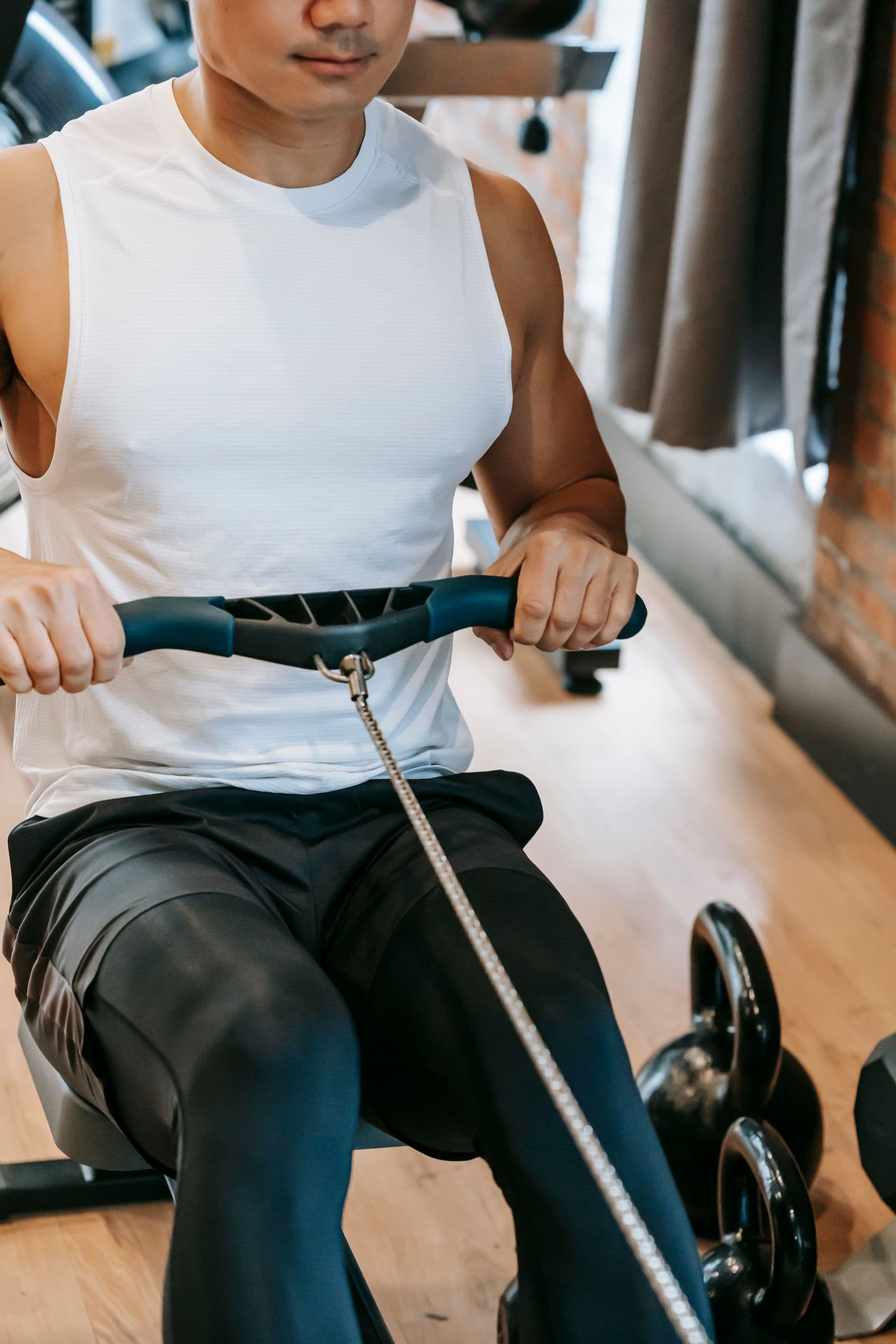
Every stroke starts at the catch: spine flexed, hips compressed, and then the biggest force of the stroke delivered through exactly that position — a thousand or more times per session. Research on international rowers found the low back the most commonly injured region in the sport, and the modern evidence is specific about the main dial: erg volume. Long unbroken ergometer sessions and rapid jumps in training volume are the most consistent predictors of rowing back pain — the erg never lets the spine out of the loading pattern the way turning a boat around does.
Add the usual accomplices — a long day at a desk before evening practice, fatigue letting the catch position collapse late in pieces, a new training block after time off — and you have the sport's most common complaint.
What it usually is — and the honest disc conversation
Most rowing back pain is non-specific: overloaded, irritated tissue that hurts with flexion and load but has no single structural villain. It sounds unsatisfying; it's actually good news, because it responds to graded loading and volume management.
Disc-type pain earns different handling when the pattern changes: pain running down the leg below the knee, numbness or tingling, weakness, or pain that's worse with coughing and sneezing. That pattern deserves a physician's exam. And two red flags skip the queue entirely: numbness in the saddle area or changes in bladder or bowel control are emergency-department problems, not PT bookings.
The teenage rower is a special case. Persistent, focal, one-sided pain in a growing athlete who trains hard is the classic story of a pars stress injury — bone, not muscle — and deserves prompt assessment and usually imaging. Weeks of "stretching it out" is how a treatable stress reaction becomes a season-ending fracture.
What actually helps
The strongest evidence in back care is boring and powerful: exercise-based rehab beats rest. For rowers that means:
- Keep moving, modify rowing. Shorter pieces, lower stroke rates, breaking long erg sessions into intervals with standing breaks — staying in the sport at a tolerable dose usually beats weeks off (the traffic-light rules tell you which days are modify days).
- Build the engine that protects the spine. Hip hinge strength, glutes and hamstrings that share the load, and trunk endurance — the program in rowing strength and mobility.
- Fix the catch, not just the back. Excessive lumbar flexion at the catch — especially as fatigue sets in — is the biomechanical factor the systematic-review literature keeps flagging. Stroke changes are rehab tools; a rowing-literate PT and your coach should be saying the same things.
- Manage the volume dial. Gradual build-ups, capped unbroken erg time, and honest planning around training spikes.
Getting the right help
A rowing-literate PT connects the exam to the stroke — catch position, erg habits, training history — and builds a plan that keeps you in the boat while the back rebuilds tolerance. Here's how to find one, and Bay Area rowers can browse rowing-friendly PTs by region. Evaluations run $125–$250 cash-pay ($175–$275 in the Bay Area), most episodes resolve in 6–12 visits, and a superbill often recovers part of the cost (what PT costs). When it's time to build back to full pieces, the return-to-rowing guide covers the progression.
Frequently asked questions
Sources (6)
- Wilson F, et al. 2021 consensus statement for preventing and managing low back pain in elite and subelite adult rowers. Br J Sports Med. 2021. — BJSM
- Wilson F, et al. Ergometer training volume and previous injury predict back pain in rowing; strategies for injury prevention and rehabilitation. Br J Sports Med. 2014. — BJSM
- Nugent FJ, et al. The relationship between rowing-related low back pain and rowing biomechanics: a systematic review. Br J Sports Med. 2021. — BJSM
- Hayden JA, et al. Exercise therapy for chronic low back pain. Cochrane Database Syst Rev. 2021. — Cochrane
- Kriz PK, et al. Lumbar spondylolysis in young athletes. Am J Sports Med. 2024. — AJSM
- MedlinePlus. Back pain. — MedlinePlus
This article is for education only and isn't medical advice. Always talk to a licensed clinician about your specific situation.