
Returning to Golf After an Injury: A Criteria-Based Plan
Short game first, driver last — how to come back without the relapse loop
Updated October 20263 minute read
Good return-to-golf plans run on criteria, not calendars: pain-free daily life, then real strength and mobility work, then putting and chipping, half-swing wedges, three-quarter irons — and the driver last, because it's the fastest, biggest rotation in the bag. Each step is judged by the 24-hour rule, range sessions come before full rounds, and nine holes come before eighteen. Golfers who skip steps don't return faster; they return twice.
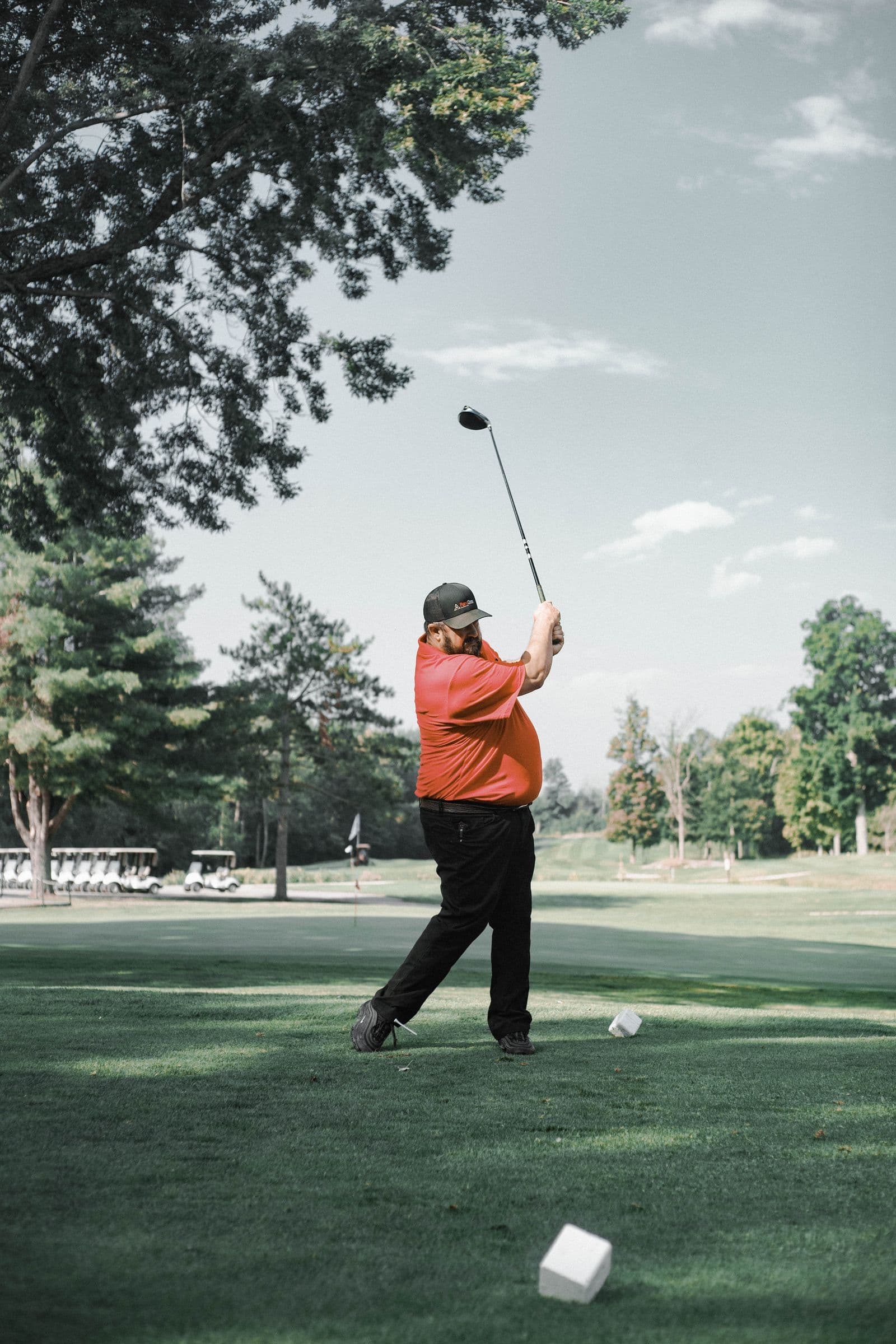
Criteria, not calendars
"Six weeks off, then play Saturday" is how most golf re-injuries get manufactured. Time heals tissue only if load comes back in order — and in golf, the order runs from the putting green to the driver, because that's the order of rotational speed and spinal demand. Each stage unlocks the next; the date takes care of itself. (It's the same philosophy as the return-to-tennis plan — different sport, same tissue math.)
The milestones, in order
- Pain-free daily life. Sitting, stairs, a full day on your feet, a car ride — quiet. Until ordinary life is comfortable, golf isn't a conversation.
- Strength and mobility at meaningful load. The golf fitness work — hip and trunk rotation, hinge patterns, carries — tolerated without flare. This is the step most golfers skip, and the one that predicts whether the comeback holds.
- Putting and chipping. Yes, really — short game first. Minimal rotation, minimal speed, real golf. A week of happy short-game sessions buys confidence honestly.
- Half-swing wedges. Twenty to thirty balls, half speed, off grass if you can get it. This is the first real test of the swing pattern.
- Three-quarter mid-irons. Build swing length and speed before volume — thirty balls at smooth effort beats eighty at full send.
- Woods and driver last. The driver is the fastest swing and the biggest rotation in the bag; it goes last for the same reason sprinting goes last in a runner's comeback.
- Range sessions before rounds; nine before eighteen. A flat nine with a cart before a hilly walking eighteen. Then golf is golf again.
The 24-hour rule
Every step gets the same referee: how is it the next morning? Mild effort soreness that's gone by morning — the step stands. Symptoms equal or worse a day later — the step was too big; repeat the previous level. Tissues announce overload on a delay, which is why the morning-after check beats any mid-round judgment.
Per-injury wrinkles
- Back: side-bending and extension tolerance gate the driver — if rehearsing your finish position provokes symptoms, the big stick stays in the bag another week. The golf back guide covers the patterns, and the traffic-light rules referee the gray zone.
- Elbow and wrist: ball-striking volume is the budget — count balls per session, build by about 20% at a time, prefer grass over mats early, and watch grip pressure when tired. The elbow guide explains why golfer's elbow punishes volume spikes.
- Hip: the walking is its own track — build course walking (hills included) separately from swing volume, because a sore hip that tolerates swings can still be overrun by a hilly eighteen.
When it flares
It probably will once — that's finding the tissue's current ceiling, not a catastrophe. Drop back two steps, not to zero, hold until the 24-hour rule passes twice, then climb again. A weekly flare-loop or pain that resets you repeatedly means the plan (or the diagnosis) needs professional eyes.
Getting help
A golf-literate PT turns this template into your plan: which milestone you're actually at, the loading that fixes the underlying cause, and a swing-volume schedule that fits your course and your calendar. Evaluations run $125–$250 cash-pay ($175–$275 in the Bay Area), often partly reimbursable — here's how to find one, and Bay Area players can go straight to the golf PT directory.
Frequently asked questions
It depends on the tissue, not the tee sheet. Muscle strains often allow a graded return within weeks; tendon problems want weeks of progressive loading; back episodes vary widely. A criteria-based plan gets you there as fast as your tissue allows — which is the only speed that doesn't produce a sequel.
Sources (5)
- Silbernagel KG, et al. Continued sports activity, using a pain-monitoring model, during rehabilitation in patients with Achilles tendinopathy. Am J Sports Med. 2007. — AJSM
- Ardern CL, et al. 2016 Consensus statement on return to sport from the First World Congress in Sports Physical Therapy, Bern. Br J Sports Med. 2016. — BJSM
- Fradkin AJ, et al. Opportunities for prevention of golfing injuries. Int J Inj Contr Saf Promot. 2006. — Int J Inj Contr Saf Promot
- McHardy A, et al. Golf injuries: a review of the literature. Sports Med. 2006. — Sports Med
- MedlinePlus (NIH). Sports Injuries. — MedlinePlus
This article is for education only and isn't medical advice. Always talk to a licensed clinician about your specific situation.