
Elbow Pain From Golf: Which Elbow, Which Side, What It Means
Golfers get golfer's elbow AND tennis elbow — and the tennis one is actually more common on the course
Updated October 20262 minute read
Golf hands out two different elbow problems: inner-elbow pain on the trail arm (golfer's elbow) and outer-elbow pain on the lead arm (tennis elbow) — and despite the names, the tennis-elbow pattern is the more common one in golfers. Both are tendon overload, both track grip tension and swing volume, and both respond to progressive loading programs over 6–12 weeks far better than to rest alone.
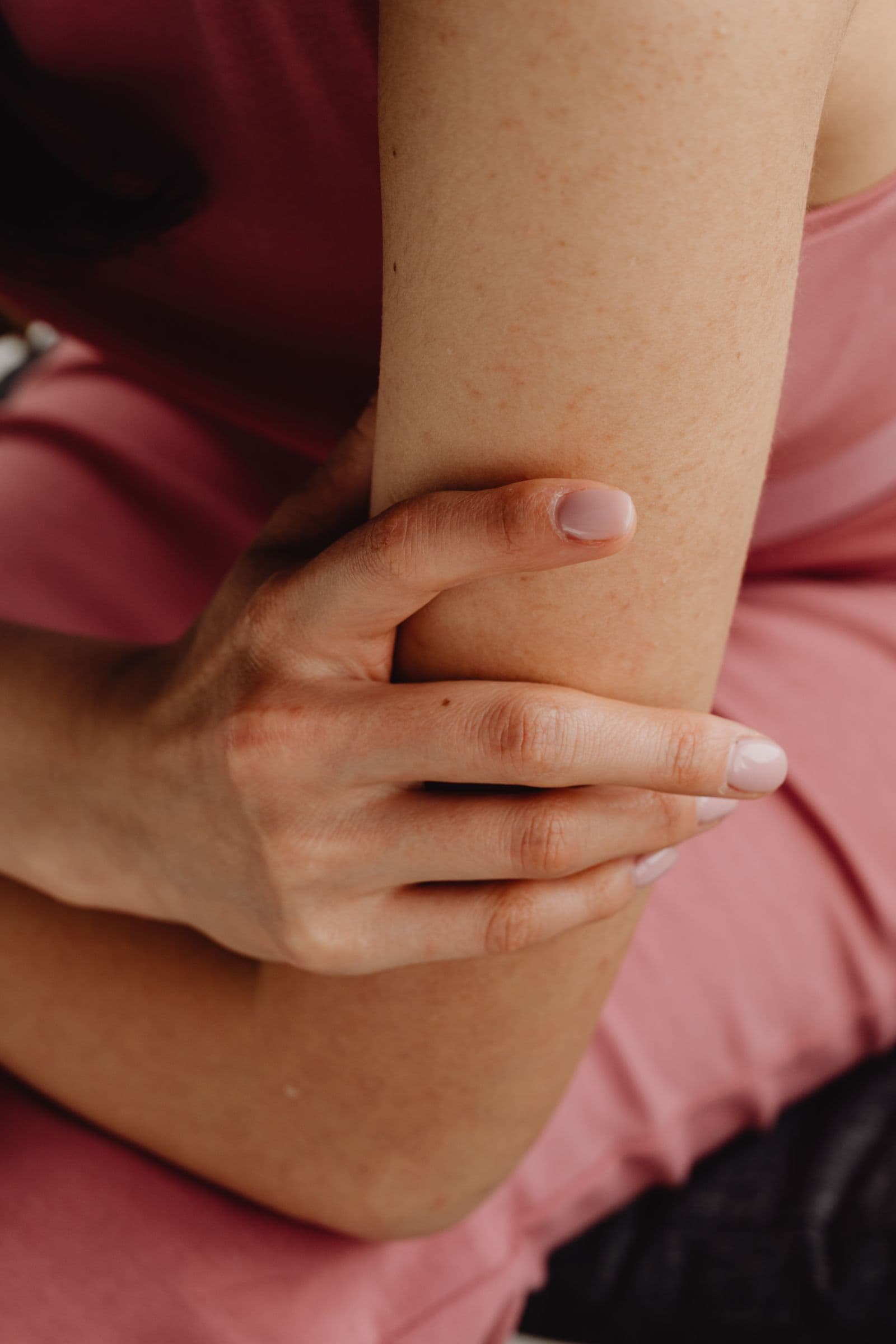
Two elbows, two names, one sport
Point to where it hurts and note which arm it's on — those two facts do most of the diagnostic work.
Outer elbow, lead arm (left arm for a right-handed golfer): the tennis elbow pattern — pain with gripping, shaking hands, lifting a coffee cup, and especially at and after impact. The lead arm's extensor tendons brake the club and absorb the strike; mats and firm ground multiply the dose. Despite the name, this is golf's more common elbow. (Outer-elbow pain that comes with forearm aching and doesn't behave like a classic case has a known mimic — see tennis elbow vs radial tunnel.)
Inner elbow, trail arm (right arm for a right-handed golfer): the namesake — golfer's elbow. The trail arm's flexor tendons load hardest late in the downswing and at impact, and they complain with gripping, wrist curls, and fat shots.
Both are tendon overload stories: load arrived faster than the tendon's capacity grew. Neither is damage you need to fear — and both linger for people who treat them with rest alone.
What drives golf elbows
- Volume spikes. The post-lesson range binge and the golf-trip marathon are the classic triggers — the same load math as every overuse injury.
- Impact quality. Fat shots send shock straight up the shaft; practice mats return more of it than turf. A stretch of mat-heavy winter practice is a common origin story.
- Grip tension and size. Strangling the club makes the forearm do isometric overtime on every swing; grips that are too thin for your hands encourage it.
- Everything else your hands do. Keyboard mice, home projects, and gym pulling all share these tendons — the course sometimes just sends the final invoice.
How PT treats it — and why it beats the needle
The landmark tennis-elbow trial compared corticosteroid injection, physiotherapy, and wait-and-see: the injection won at six weeks and clearly lost by a year, with higher recurrence. The durable fix is progressive loading — rebuilding the tendon's capacity with heavier-than-comfortable, slow forearm work — plus short-term load management on the course: fewer range balls, better strike quality drills, grip checks, sometimes a strap as a bridge.
Most golfers keep playing through treatment at managed volume. Expect meaningful change in 6 weeks and a robust elbow by 12; the strength page covers where forearm work fits the bigger program.
When to book
Two weeks of self-managed load reduction with no progress, pain that's spreading into daily gripping, or any true weakness or locking — that's the evaluation line. A golf-literate PT (here's how to vet one) will sort which tendon, test grip and wrist strength, and build the loading plan; cash-pay evaluations run $125–$250 (what PT costs), often partly recoverable via superbill. Bay Area golfers can browse golf-friendly PTs by region.
Frequently asked questions
Sources (5)
- Bisset L, et al. Mobilisation with movement and exercise, corticosteroid injection, or wait and see for tennis elbow: randomised trial. BMJ. 2006. — BMJ
- McHardy A, et al. Golf injuries: a review of the literature. Sports Med. 2006. — Sports Med
- Vuvan V, et al. Unsupervised Isometric Exercise versus Wait-and-See for Lateral Elbow Tendinopathy. Med Sci Sports Exerc. 2020. — MSSE
- AAOS OrthoInfo. Tennis Elbow (Lateral Epicondylitis). — AAOS OrthoInfo
- MedlinePlus (NIH). Elbow Injuries and Disorders. — MedlinePlus
This article is for education only and isn't medical advice. Always talk to a licensed clinician about your specific situation.