
The Badminton Parent's Guide: Growing Bodies in a Year-Round Sport
Heel pain, knee bumps, back rules, and the club-calendar math every junior badminton family should know
Updated October 20263 minute read
Junior badminton — huge in the Bay Area, with some of the country's biggest academies — is a year-round, lunge-and-jump sport played by growing bodies, and that combination has predictable pressure points: Sever's disease in the heels, Osgood-Schlatter at the knees, and one hard rule — a teenager with persistent, focal back pain after smashing gets assessed, not stretched. Add the early-specialization evidence, a sore-versus-hurt vocabulary, and a sane calendar, and the sport is a terrific place to grow up.
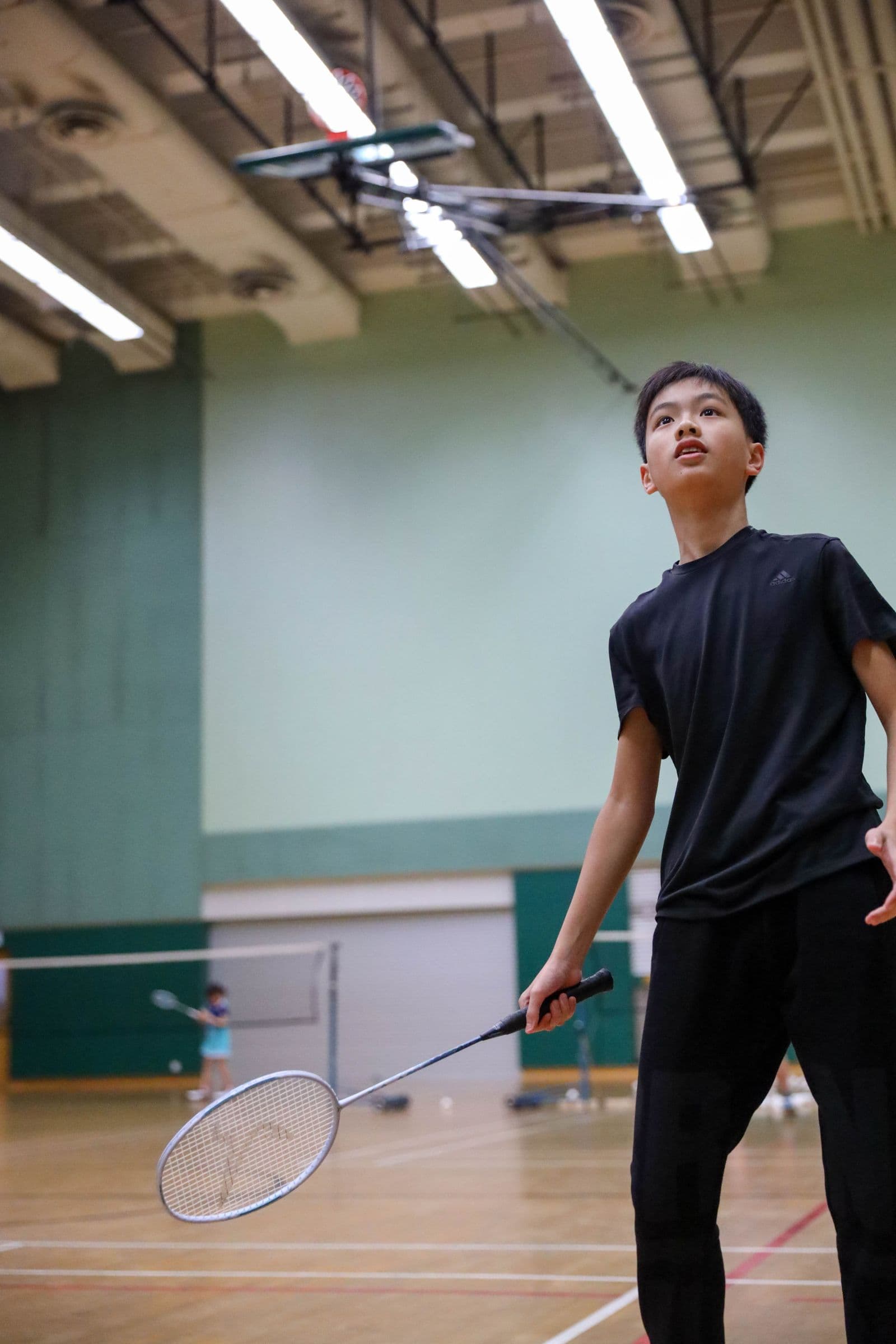
The scene your kid is growing up in
The Bay Area — the South Bay and Peninsula especially — hosts one of the biggest junior badminton scenes in the country: multi-court academies, year-round training groups, and junior ladders deep enough that national-level play starts locally. That's a gift (coaching, community, competition) with one catch: the calendar never ends on its own, and the sport's lunge-jump-smash pattern lands on bodies that are still being built. A parent who knows four things — two growth-plate names, one back rule, and the calendar math — can let their kid chase the sport hard and safely.
The two growth-plate names
Sever's disease (heels, roughly 8–14). The calf pulls on a growth plate at the back of the heel, and thousands of lunges and jumps irritate it — heel pain during or after training, sometimes a limp the next morning. It's the most common heel problem in jumping kids, it's benign, and it's managed, not pushed through: temporarily fewer consecutive court days, heel cushioning, calf care, and a graded return. The systematic-review evidence backs conservative care; nobody should be talking surgery to you about Sever's.
Osgood-Schlatter (knees, roughly 10–15). The same story one joint up: the kneecap tendon pulls on the shin's growth plate, making a tender bump that hates jump smashes and deep lunges. Load management and strength work carry a player through it; the bump often stays, the pain ends with growth.
Both share the rule that matters: growth-plate pain is dosed, not ignored — "play through it" is the one coaching instinct that doesn't transfer to growing bodies.
The back rule
Smashing is an overhead sport's whip: the low back arches and rotates at speed, over and over. In a still-growing spine, persistent focal low-back pain — especially one-sided, especially worse with arching — can be a stress injury of the spine's growth areas, and the pediatric sports-medicine literature is clear that it's imaging territory. The rule for a badminton family: more than two weeks of localized back pain in a smashing teen means assessment, not more stretching. Caught early, these settle with modified load; missed, they can turn into a long problem.
The calendar is the risk factor
The youth-sports position statements converge on numbers a parent can actually use:
- Hours-per-week ≤ the child's age across all organized sport — count school team and academy together in overlap weeks.
- At least one full rest day a week, every week.
- A real off-season — or a genuinely different second sport — rather than twelve months of shuttles.
- Specialize late: the evidence ties single-sport focus before the mid-teens to more overuse injury and burnout, not more medals.
And teach the vocabulary that makes all of it work: sore is vague, both-sides, gone in a day; hurt is one spot, persistent, affects how they move or play. Sore gets a lighter week; hurt gets an assessment.
Questions worth asking a coach or academy
How do you count total weekly load for kids who also play for school? What happens when a player reports pain? Do you program rest days and an off-season? Who teaches footwork and shoe habits? Good programs have crisp answers.
A badminton-literate PT is the family's load engineer — for a Sever's season, an Osgood flare, or a graded return after any of it. What PT costs covers the money, and Bay Area families can browse badminton-friendly PTs across the region.
Frequently asked questions
Sources (7)
- DiFiori JP, et al. Overuse injuries and burnout in youth sports: a position statement from the American Medical Society for Sports Medicine. Clin J Sport Med. 2014. — AMSSM
- Jayanthi N, et al. Sports specialization in young athletes: evidence-based recommendations. Sports Health. 2013. — Sports Health
- Hernandez-Lucas P, et al. Conservative treatment of Sever's disease: a systematic review. J Clin Med. 2024. — J Clin Med
- Haus BM, Micheli LJ. Back pain in the pediatric and adolescent athlete. Clin Sports Med. 2012. — Clin Sports Med
- AAOS OrthoInfo. Sever's disease (calcaneal apophysitis). — OrthoInfo
- AAOS OrthoInfo. Osgood-Schlatter disease (knee pain). — OrthoInfo
- Bell DR, et al. Sport Specialization and Risk of Overuse Injuries: A Systematic Review With Meta-analysis. Pediatrics. 2018. — Pediatrics
This article is for education only and isn't medical advice. Always talk to a licensed clinician about your specific situation.