
Swim Technique and Injury: What Your Stroke Does to Your Shoulder
The handful of stroke features that actually matter for load — and why fixing them is a team sport
Updated October 20262 minute read
A few specific stroke features concentrate load on the shoulder: a hand crossing the midline at entry, a dropped-elbow pull, breathing to one side only, and low body roll. Technique changes genuinely move load — but they're load changes themselves, so they're introduced gradually, and the honest hierarchy still puts training volume first. The strongest setup is a PT finding the capacity gap while your coach owns the stroke.
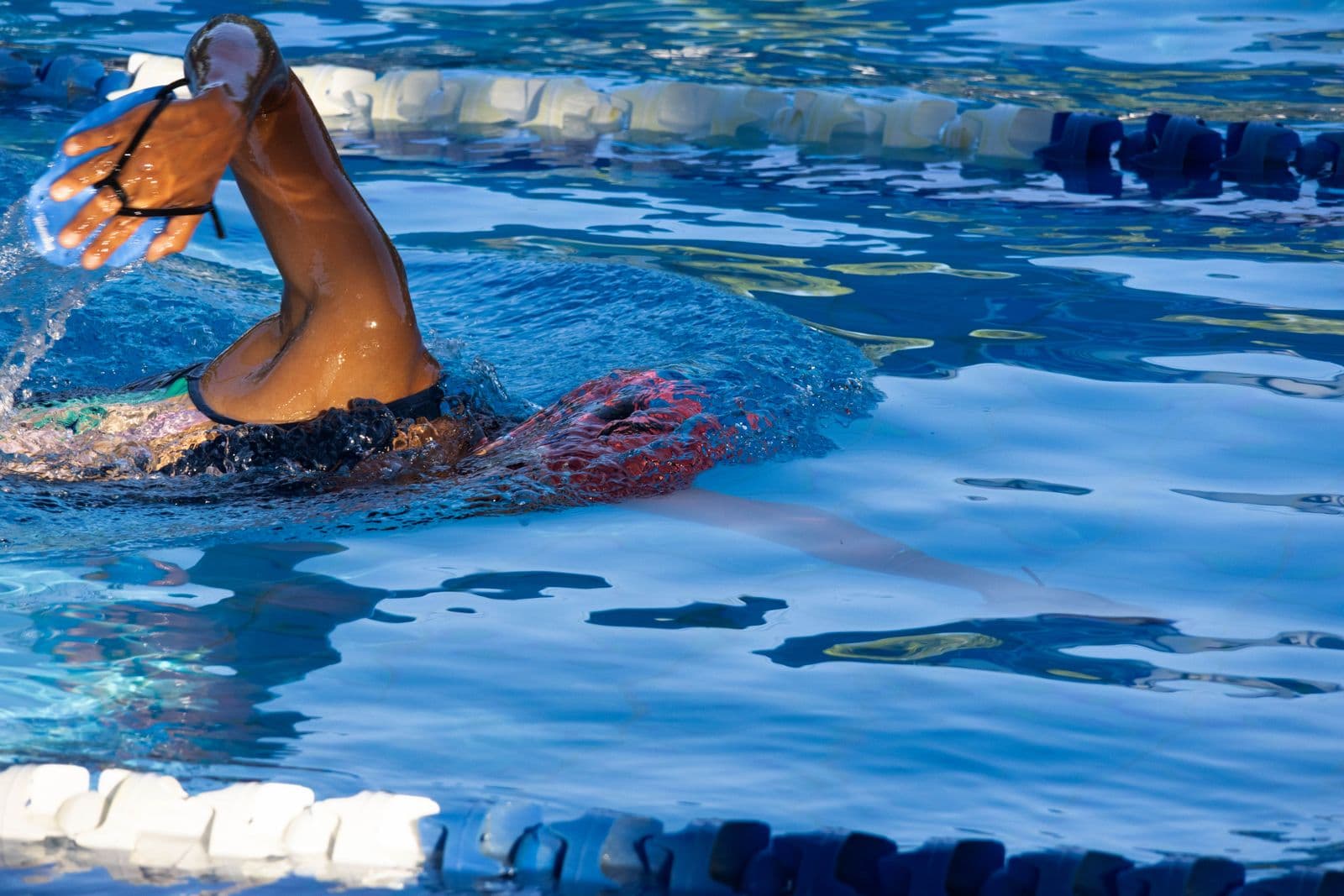
Technique is a load variable, not a moral failing
Swimmers hear "your technique is causing your injury" the way runners hear "it's your shoes" — as if there's one correct form and pain is the punishment for deviating. The truth is more useful: technique determines where the work goes. Two swimmers can push the same yardage, and the one whose stroke concentrates load on the front of the shoulder files the complaint. Change the stroke and you redistribute the load — that's real, and it's also not magic.
The four features that actually matter
- Hand crossing the midline at entry. The classic one. An entry that crosses toward the head puts the shoulder in its most impingement-prone position under load, every stroke. A straighter, slightly wider entry is often the single highest-value change.
- The dropped-elbow pull. Elbow sagging below the wrist during the pull shifts work from the big back muscles onto the rotator cuff. "High elbow" isn't aesthetic advice; it's load routing.
- Breathing to one side only. One shoulder does extra rotation and catch-up work every length, lap after lap. Bilateral breathing — or at least alternating sides by length — splits the bill. (It also shows up as one-sided neck complaints.)
- Low body roll. When the torso stays flat, the shoulder makes up the rotation. More roll means the big trunk muscles share work the cuff was doing alone.
Everything else — hand pitch, kick timing, head position — matters for speed, but these four carry most of the injury-relevant load story.
A technique change is itself a load change
Here's the trap: fixing your stroke re-routes force through tissue that wasn't trained for it. Swimmers who overhaul their pull in one ambitious week often trade an irritated front-of-shoulder for an angry mid-back or a different corner of the same cuff. Introduce stroke changes the way you'd add yardage: one change at a time, short doses first, built up over weeks.
PT and coach: who owns what
The clean division of labor: the PT figures out why your tissue can't meet the current demand — strength gaps in the scapular and cuff muscles, mobility limits in the thoracic spine, a load history that outran capacity — and treats it. The coach owns the stroke itself: drills, cues, timing. The best outcomes happen when they talk, because a stroke change that ignores a strength gap fails, and strength work that ignores the stroke treats symptoms.
Video earns its keep here: most of these features are invisible from inside your own stroke, and obvious on film from the deck or underwater.
The honest hierarchy
If your shoulder already hurts, start with the swimmer's shoulder guide — technique work joins rehab, not instead of it. And keep the levers in order: training load first, capacity second, technique third. A perfect stroke won't survive a doubled paddle block, and a mediocre one rarely hurts a well-progressed, well-conditioned swimmer.
For the capacity side, a PT who treats swimmers can find the gap in one evaluation ($125–$250 cash-pay, $175–$275 in the Bay Area — what PT costs, often partly reimbursable via superbill). Here's how to vet one, and Bay Area swimmers can browse swim-friendly PTs by region.
Frequently asked questions
Sources (5)
- Wanivenhaus F, et al. Epidemiology of injuries and prevention strategies in competitive swimmers. Sports Health. 2012. — Sports Health
- Yanai T, Hay JG. Shoulder impingement in front-crawl swimming: I. A method to identify impingement. Med Sci Sports Exerc. 2000. — MSSE
- Sein ML, et al. Shoulder pain in elite swimmers: primarily due to swim-volume-induced supraspinatus tendinopathy. Br J Sports Med. 2010. — BJSM
- Batalha N, et al. Does a land-based compensatory strength-training programme influence the rotator cuff balance of young competitive swimmers? Eur J Sport Sci. 2015. — EJSS
- Kerr ZY, et al. Epidemiology of National Collegiate Athletic Association men's and women's swimming and diving injuries. Br J Sports Med. 2015. — BJSM
This article is for education only and isn't medical advice. Always talk to a licensed clinician about your specific situation.