
Do Running Shoes Prevent Injuries? What a PT Actually Looks At
Comfort beats pronation-matching, rotation beats the perfect pair, and load beats everything
Updated October 20262 minute read
Decades of research have failed to show that matching shoes to foot type prevents running injuries — comfort is the better-supported filter, and rotating two different pairs is associated with lower injury risk. Shoes matter most as a load change: switching styles abruptly is a training spike in disguise. Training load, not footwear, drives most injuries.
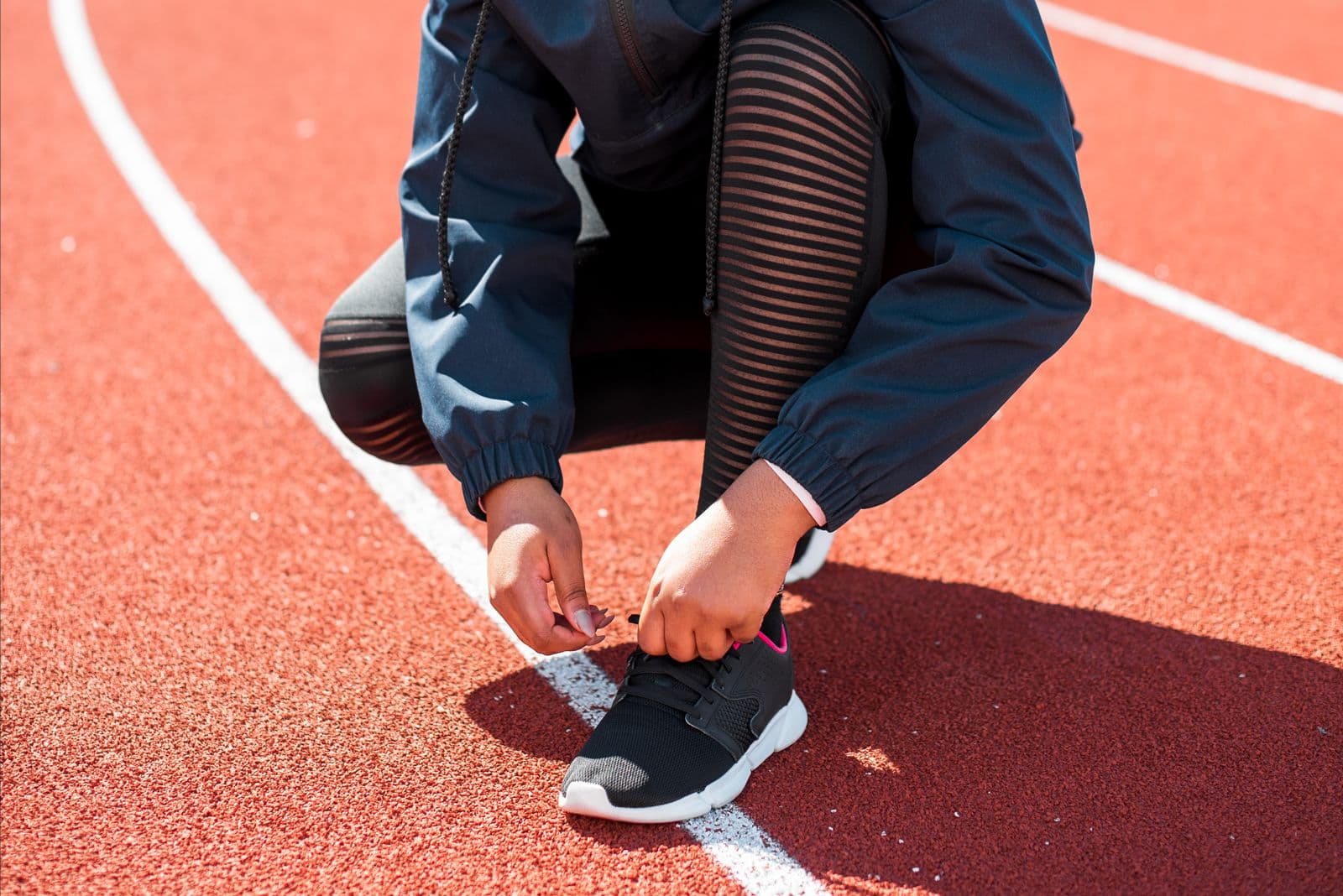
The uncomfortable truth about shoe prescriptions
The running-store ritual — watch you walk, diagnose your arch, prescribe neutral/stability/motion-control — is based on a model that research has largely failed to support. Military studies assigning thousands of recruits shoes by foot shape found no reduction in injuries versus giving everyone the same shoe. Pronation, it turns out, is something feet are supposed to do.
What survived the research: comfort. Runners who choose the shoe that feels best to them tend to do at least as well as runners assigned shoes by any system. Your nervous system is doing real evaluation when a shoe feels right — trust it over the wall chart.
What actually moves the needle
- Rotate two pairs. Runners alternating between different shoe models showed meaningfully lower injury rates in cohort research — likely because different shoes distribute load slightly differently, so no one tissue takes every mile.
- Replace by feel and age, not just mileage. Deep midsole creasing, a "flat" feeling versus a fresh pair, or the return of old aches are better signals than an odometer. Foam ages even sitting in a closet — if your comeback shoes are three years old, start fresh (more on that in the return-to-running guide).
- Treat style switches as training changes. Minimalist, maximalist, zero-drop, carbon-plated — every switch shifts load between calf, Achilles, knee, and foot. The injury isn't the shoe; it's the sudden change. Transition over weeks, starting with short easy runs, exactly as you'd add mileage.
Shoes are the small lever. Load is the big one.
Most running injuries track to training errors — spikes in volume or intensity — not footwear. A perfect shoe won't protect a 40% mileage jump, and a mediocre shoe rarely hurts a well-progressed runner. If you're debating shoes while ignoring your training log, you're optimizing the wrong variable. The pain rules and a sane progression protect you more than any purchase.
When a PT's take on footwear is actually worth it
Footwear advice earns clinical attention in a few specific cases:
- Recurring injuries that track with shoe changes — the Achilles that flares every time you drop to a flatter shoe, the plantar fasciitis that returned with the minimalist experiment
- A current injury where load-shifting helps — a temporary heel lift or a more cushioned shoe can calm an irritated tendon while rehab does the real work
- As part of a gait analysis, where what you run in is assessed alongside how you run
A running-focused PT treats the shoe as one load-management tool among many — not a diagnosis. Here's how to find one; Bay Area runners can browse the local running PT directory. An evaluation runs $125–$250 cash-pay and is usually partially reimbursable with a superbill.
Frequently asked questions
Sources (5)
- Knapik JJ, et al. Injury reduction effectiveness of assigning running shoes based on plantar shape in Marine Corps basic training. Am J Sports Med. 2010. — PubMed
- Malisoux L, et al. Can parallel use of different running shoes decrease running-related injury risk? Scand J Med Sci Sports. 2015. — PubMed
- Nielsen RO, et al. Training errors and running related injuries: a systematic review. Int J Sports Phys Ther. 2012. — IJSPT
- Saragiotto BT, et al. What are the main risk factors for running-related injuries? Sports Med. 2014. — Sports Med
- van Gent RN, et al. Incidence and determinants of lower extremity running injuries in long distance runners: a systematic review. Br J Sports Med. 2007. — BJSM
This article is for education only and isn't medical advice. Always talk to a licensed clinician about your specific situation.