
Pickleball Elbow: Why a Light Paddle Still Wrecks Tendons
The same injury as tennis elbow — delivered by grip squeeze, wristy dinks, and daily play
Updated October 20262 minute read
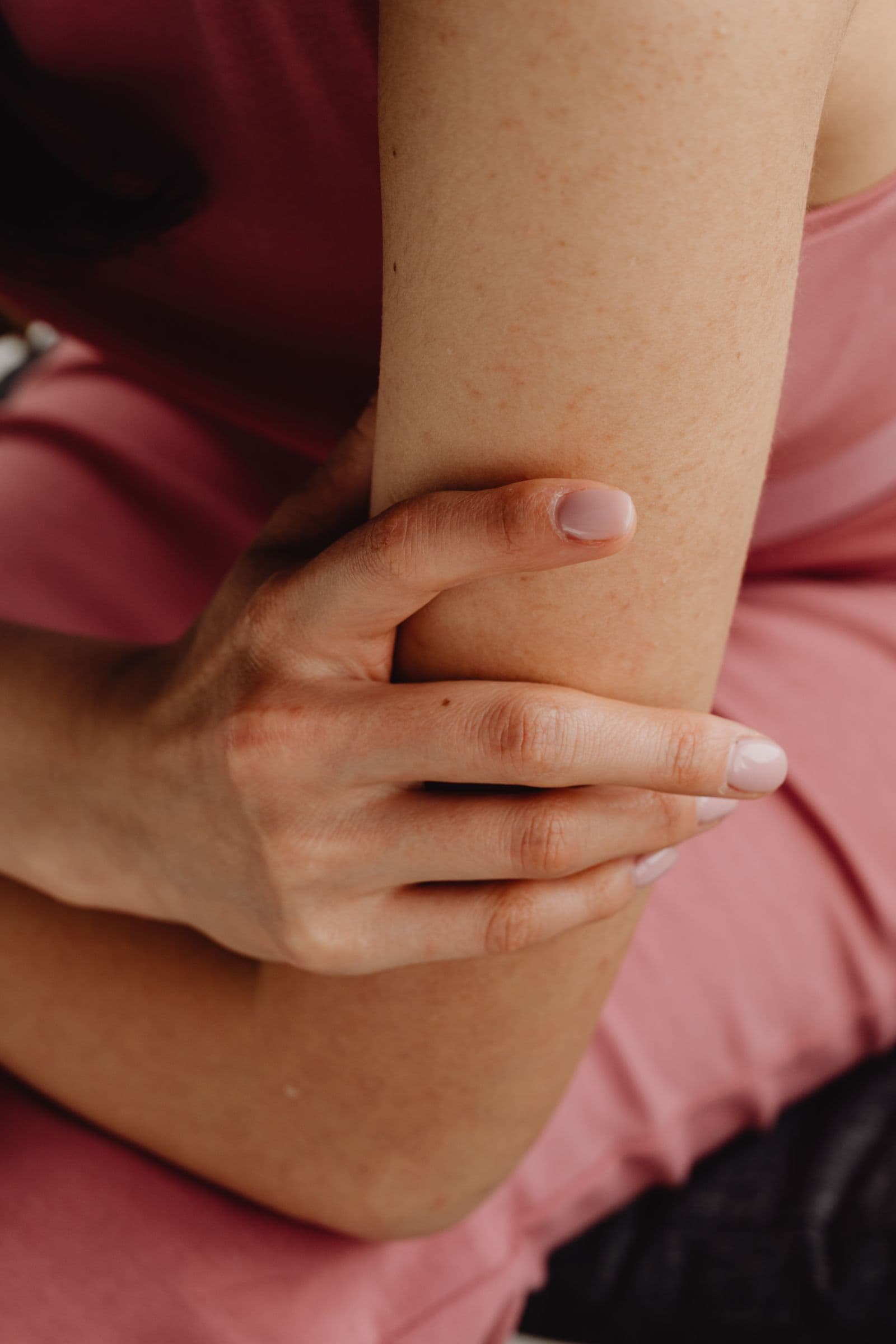
Pickleball elbow is the same outer-elbow tendon overload as tennis elbow — the paddle is lighter than a racket, but constant grip squeeze, wrist-driven dinks and flicks, and near-daily play add up to more tendon load than most players expect. It responds to progressive loading programs over 6–12 weeks far better than to rest, and paddle weight, grip size, and session volume are all adjustable contributors.
The light-paddle paradox
A pickleball paddle weighs half what a tennis racket does, so players assume their elbow is safe. The tendon disagrees, for three reasons:
- Grip squeeze is constant. Dinking rewards a firm, ready grip for long stretches — and static grip tension is exactly the load the outer-elbow tendons tolerate worst.
- The wrist does more. Pickleball's flicks, rolls, and speed-ups are wrist-driven in a way most tennis strokes aren't; every wristy shot is powered by the muscles that anchor at the outer elbow.
- Volume is unmatched. Tennis players play twice a week; pickleball players play five days, sometimes seven. The per-week load math swamps the per-shot difference.
The result is garden-variety tennis elbow — outer-elbow pain with gripping, worse after play, tender to press — wearing a pickleball jersey. Inner-elbow pain is the mirror-image problem (golfer's elbow), less common on the pickleball court but it shows up with heavy topspin rolls.
The two-week self-management trial
For a grumbling outer elbow without red flags (no trauma, no real weakness, no numbness):
- Trim the dink-heavy volume — fewer sessions or shorter ones, per the traffic-light rules.
- Check your grip size — too small forces extra squeeze; building a grip up with an overgrip costs a few dollars.
- Loosen the death grip — grip firm at contact, relaxed between shots. If your forearm pumps up before your legs tire, that's the tell.
- Start forearm loading — slow, heavy wrist-extension work (a dumbbell or a resistance band) every other day. This is the actual treatment, and starting it early is the whole game.
Two weeks without progress — or pain with daily gripping like a coffee cup or a handshake — means stop experimenting and book an evaluation.
What treatment actually looks like
The evidence here is unusually clear: progressive loading programs beat both waiting and cortisone over the long run — the landmark randomized trial found injections felt best at six weeks and worst at one year. A PT's version: graded wrist and grip loading that rebuilds the tendon, a session budget that keeps you playing while it heals, and the equipment audit above done properly. Expect $125–$250 cash-pay for the evaluation ($175–$275 in the Bay Area), 6–12 visits for a typical episode, and a superbill to recover part of it — what PT costs has the numbers.
Finding the right help
You want a clinician who treats court and racquet athletes and asks about your paddle, grip, and weekly court hours before blaming your age — here's how to vet one, and Bay Area players can browse pickleball-friendly PTs by region.
Frequently asked questions
Sources (5)
- Bisset L, et al. Mobilisation with movement and exercise, corticosteroid injection, or wait and see for tennis elbow: randomised trial. BMJ. 2006. — BMJ
- Bellm EJV, et al. Understanding upper extremity injury prevalence and risk in pickleball players: a nationwide survey. JOSPT Open. 2026. — JOSPT Open
- American Academy of Orthopaedic Surgeons (OrthoInfo). Tennis Elbow (Lateral Epicondylitis). — AAOS OrthoInfo
- Lauersen JB, et al. The effectiveness of exercise interventions to prevent sports injuries: systematic review and meta-analysis. Br J Sports Med. 2014. — BJSM
- Forrester MB. Pickleball-related injuries treated in emergency departments. J Emerg Med. 2020. — J Emerg Med
This article is for education only and isn't medical advice. Always talk to a licensed clinician about your specific situation.